
Rendar jack sockets
In progress, March 2026

The Rendar seahorse.
Incorporated in 1948, the "Rendar Instrument Company" - to give it its full name - became part of the British Ferrograph group in 1960. Its profile increased substantially thereafter. Adverts in the 1950s had been fairly few and far between. For the most part in the early 1960s, Rendar accompanied Ferrograph at various audio trade fairs, notable being those of the "Association of Public Address Engineers" (which JMI would later join), and the "Radio and Electronic Component Manufactures Federation" fair at Earl's Court in London, one of the largest events in the trade calendar. Jennings presumably came upon the company in the later 1950s either by recommendation or via some trade event.

Advert from an Electronic Components Trade Fair catalogue of May 1963.
A page on Re-an sockets, primarily used by Jennings for its smaller amplifiers, can now be found here.
Bakelite - late 1950s, early 1960s
Below, pictures of the earlier types of Rendar jack socket, used by Jennings from at least mid 1958 (AC15s with blue hammertone chassis) through to early 1962. By far the most common were those with the Rendar seahorse in a roundel. Note that the threads of the examples illustrated are different, so parts were not always interchangeable. End caps came with black, brown, olive green, red, and white nuts.
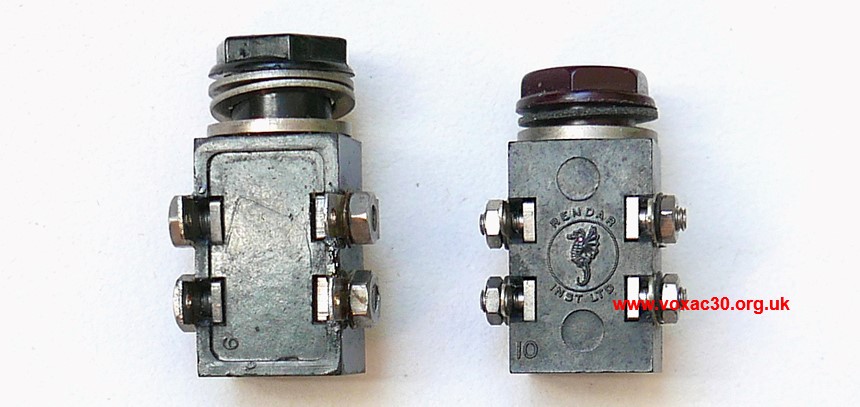
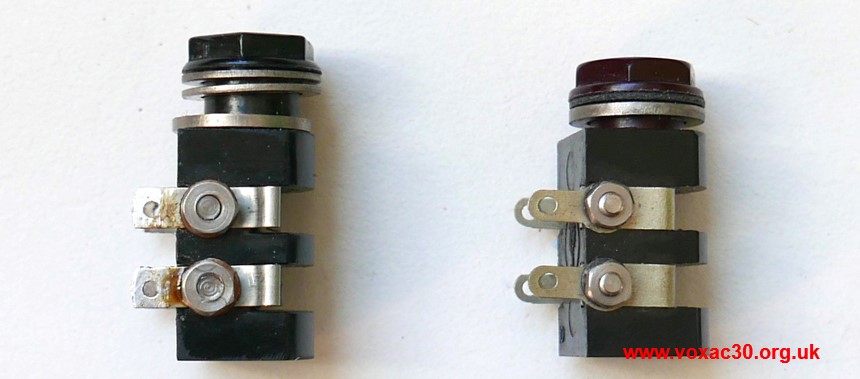
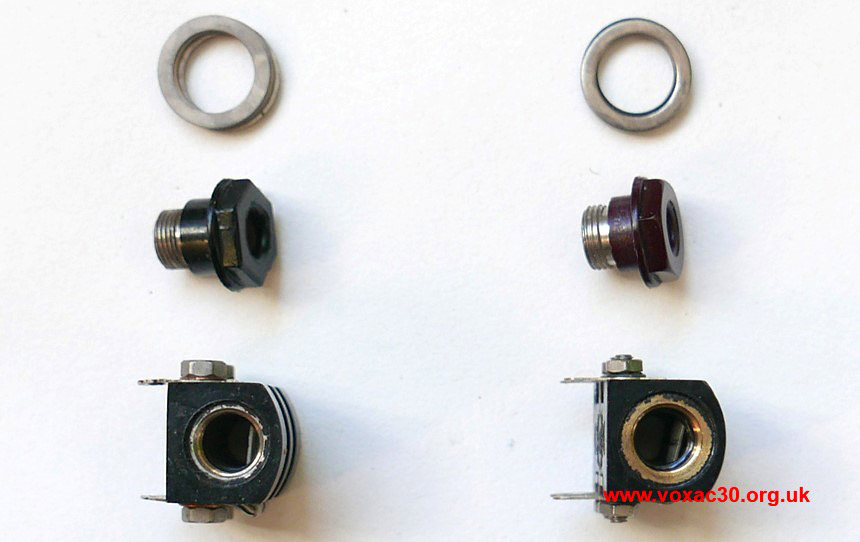
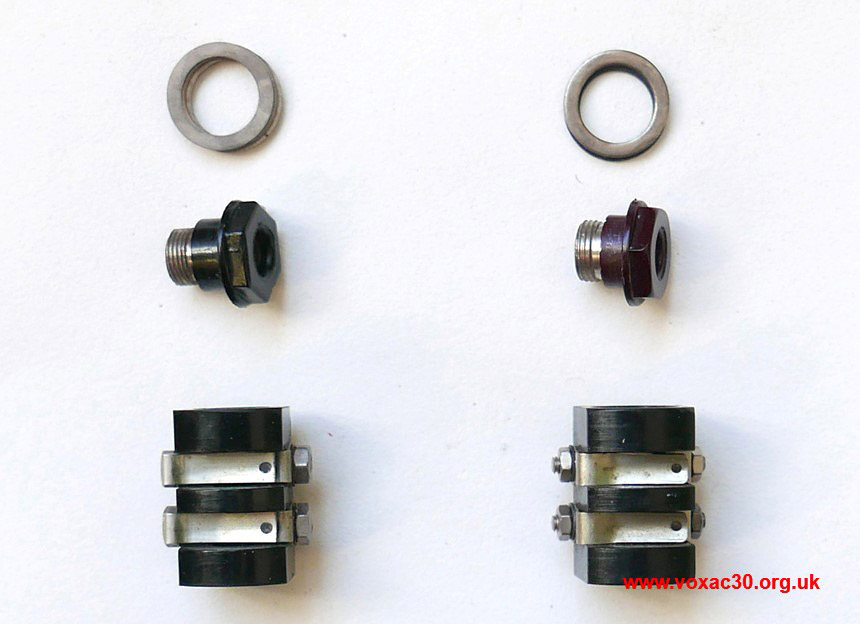
It is likely that JMI had jigs to aid assembly, especially in the case of the six-input AC30 - a means of holding the washers against the body of the jack as the end cap was screwed in from above the control panel.

AC15 serial number 3730, late 1959.
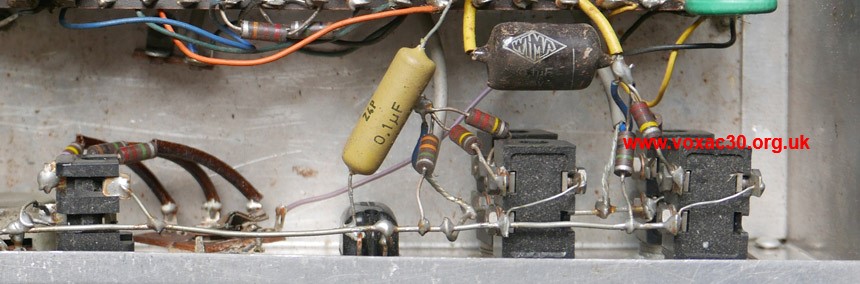
Single speaker AC/30 serial number 4158, summer/early autumn 1960, Rendar sockets with no logo at right, a Re-an socket for the footswitch at left. In early AC/30s this seems to have been standard.
Plastic - early 1962 to 1968
Rendar plastic-bodied jack sockets with a plastic nut. So far as one can tell, JMI began using these in early 1962.

AC30 serial number 5407, sockets with plastic bodies, "Patent Applied For" legend, solder terminals set in the body (no fixing screws).
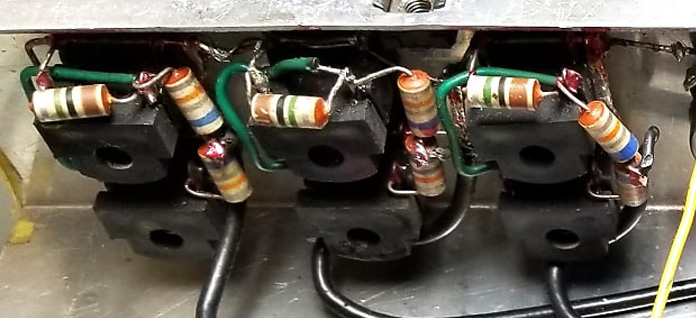
AC30 serial number 5355, a slightly messy assembly. The earliest AC30 currently known with plastic sockets is serial number 5230.
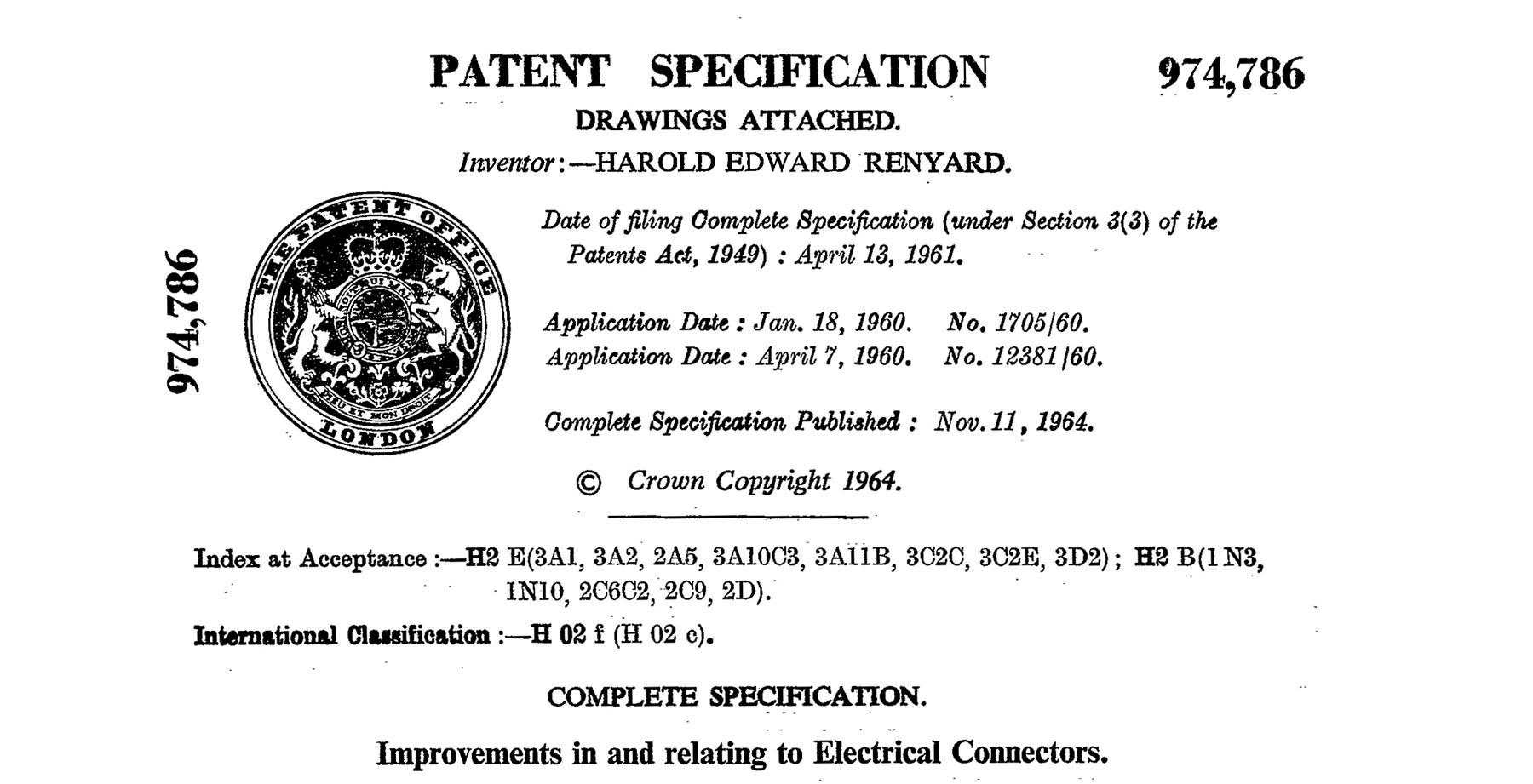
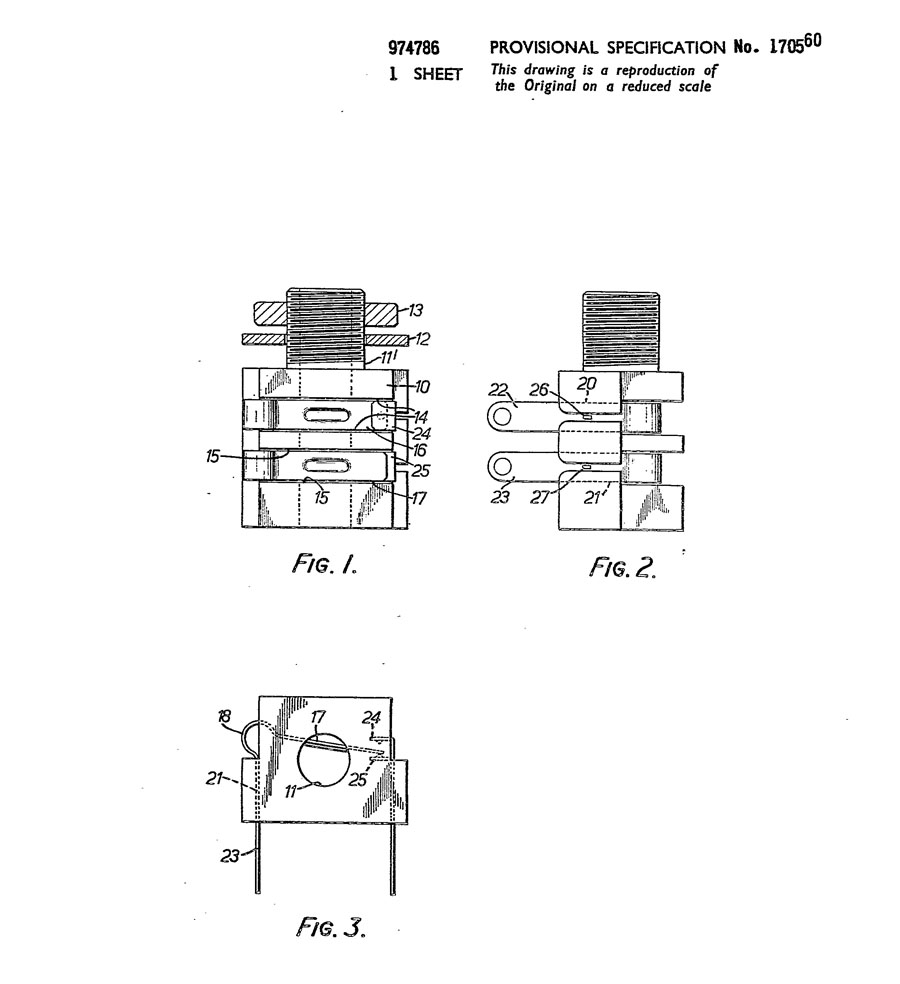
Below, details from the Rendar patent for its new all-plastic socket, applied for in 1960, granted (published) in November 1964.
JMI, or perhaps more accurately its contractors, evidently bought the new-style sockets in large quantities. The example with "Patent Applied For" is one of four from an AC50 made around Spring 1965.
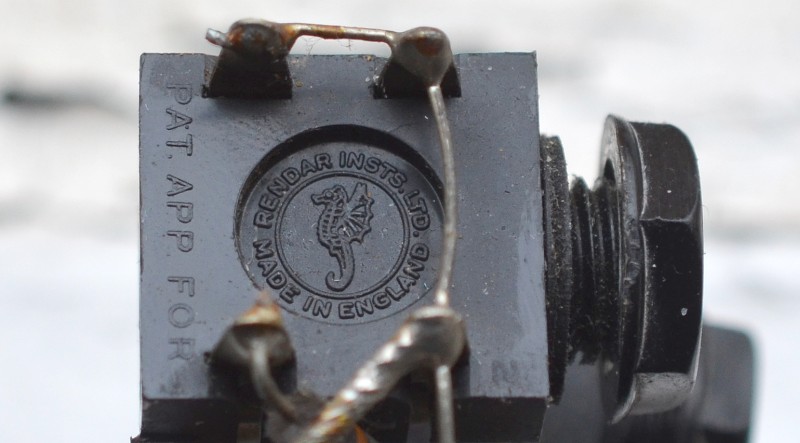
"Patent Applied For", one of four sockets from an AC50 from Spring 1965.
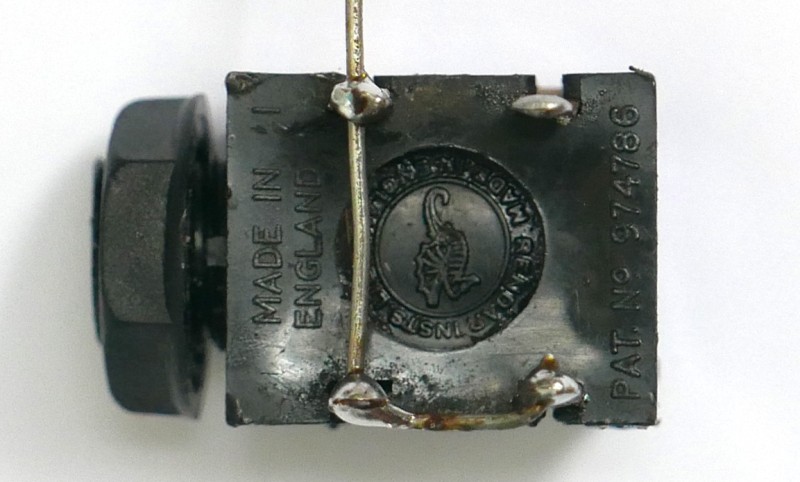
"Patent No. 974786".
A quick survey of AC30s from mid 1964 to 1968 shows that Rendar jack sockets with "Patent Applied For" legends were regularly used through to the end of production in early 1968. The latest certain example that has come to light so far is Super Twin serial number 5645 (Woden output transformer dated "BZ" = Feb. 1968 for its manufacture).
Also to say that Rendar jacks with no legend relating to the patent (the area underneath the "Rendar" roundel being entirely blank) were also used during this period, often fitted side by side with sockets that had the "Patent Applied For" line. The presence or not of legends naturally meant nothing to those assembling the chassis.
So far, no example of a socket bearing the patent number. Later today or tomorrow, a note on earlier Rendars.
Sockets with patent number
Below, an instance of Rendar jack sockets with patent number (the patent granted in November 1964): AC4 serial number 4870. Thanks to Chris for the picture.
As the sockets with this new legend must have taken some time to manufacture and get to market, they are probably of much the same date as the main preamp filter capacitor in the chassis (assembled for JMI by Triumph) - early 1965. The amp will not have been ready for sale until some time later though.
AC4 serial number 4798 still has "Patent Applied For" sockets.
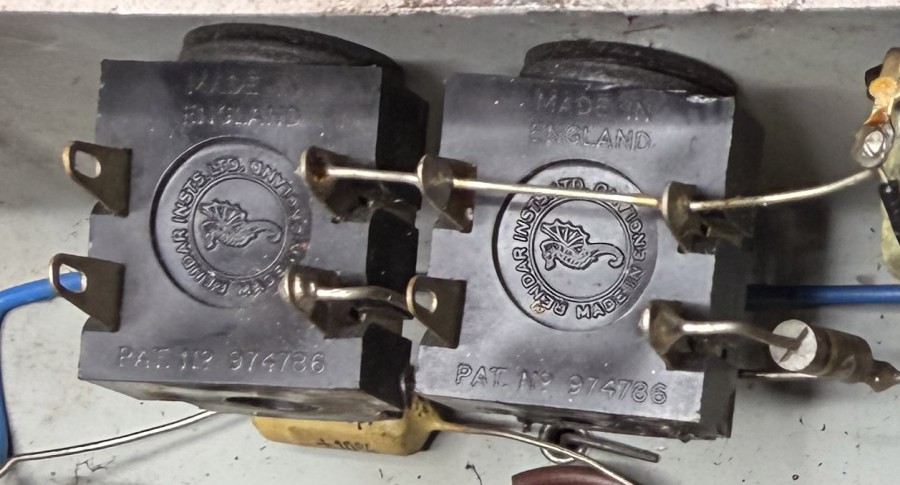
Patent No. 974786, see the details of the patent documents a little way above on this page.