Vox Continental legs - "Z legs"
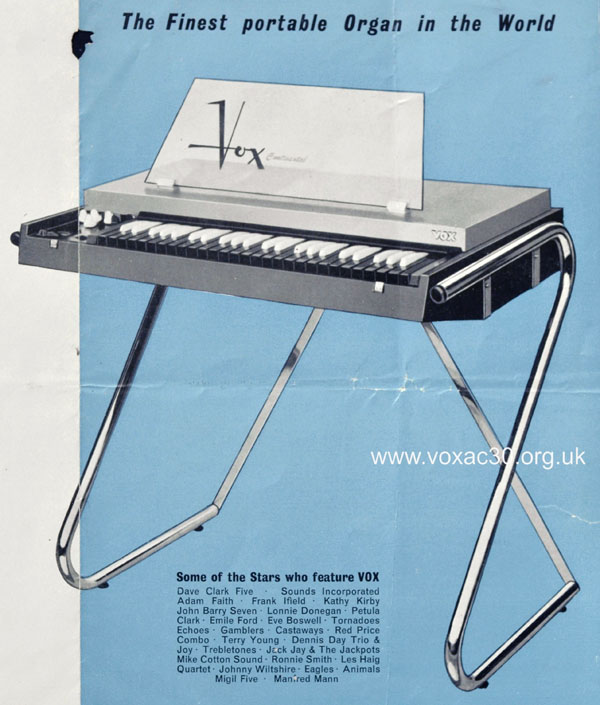
Promotional picture from 1964. The original drawing was made in late 1962.
Chrome stands were nothing new, either in the organ world or for Jennings. Below, a rare surviving "gigster" stand for the Univox from around 1956. The idea is likely to have been borrowed from the stand supplied by Selmer for the Clavioline.
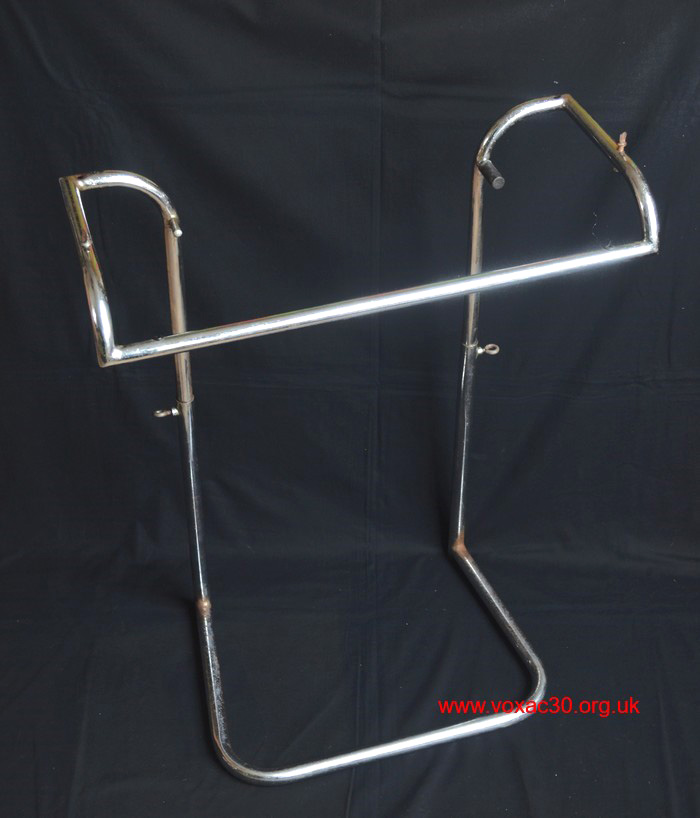
Jennings Univox gigster stand, c. 1956
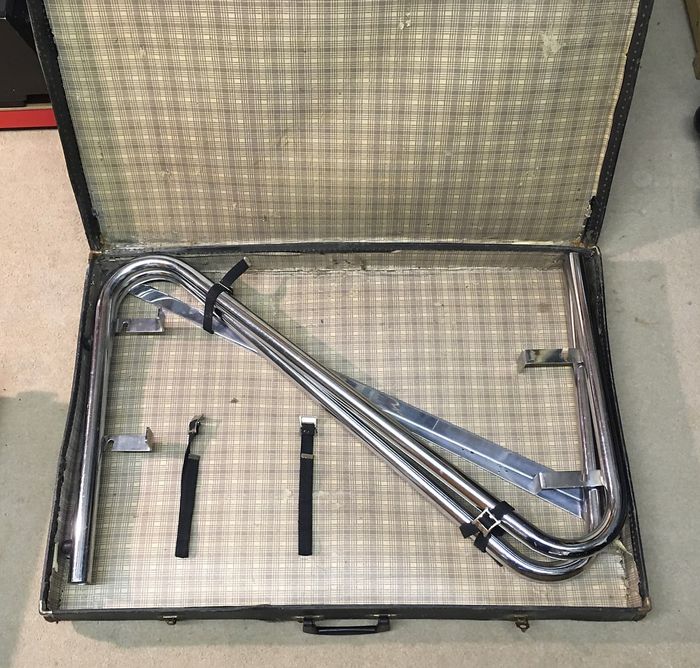
The innovation where the Continental was concerned lay in the overall design - detachable chrome Z-legs, braced at back, which packed away in their own carrying case. Up to this point - late 1962 - most portable organs had straight legs, either of the screw-in or bolt-on variety.
Late 1962 and 1963
The chrome stands supplied with early Vox Continentals were evidently different in a couple of important respects from later ones. The side legs initially were attached to the body of the organ by simple round-headed bolts rather than the more familiar "butterfly bolts" (also called "wing bolts", "thumb screws", and so on), which were introduced at some point in 1964 - probably early to mid. In all cases the bolts screwed into T-nuts set in the wooden sides and back of the organ.
Also different were the chrome brackets that hooked under the underside of the organ. At first these were simple flat metal L-shapes with a hole for the screw. Later, an angled slot was provided so that the butterfly bolts could be screwed in first and the legs slipped onto them - a huge advantage to the person setting the organ up for use.

Standard promotional picture (drawn in late 1962). Simple screws/bolts fix the legs to the organ.

A detail from a picture of The Overlanders with one of the first Continentals.

First version legs on Continental TC1207.

Later style legs on Continental TC2529, angled slots in the brackets and butterfly bolts to fix them to the organ.
More to come shortly (October 2023).
Cover and case
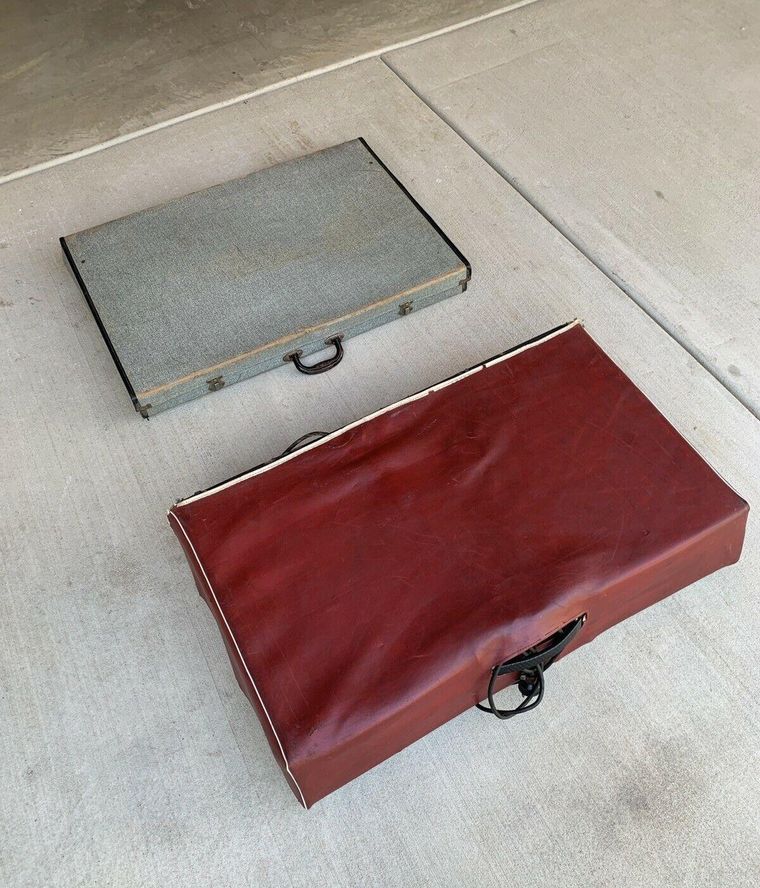
Below, a Continental from 1964 with its original red vinyl cover and case for the legs. At this point the cases for the legs were covered in a light blue/grey vinyl with a pronounced hatched pattern. The interiors of these cases were normally lined with a blue and brown check vinyl. Later cases were covered in black and had red interiors.