
Vox AC30: the Celestion silver (T1088)
May 1964 - 1973
Updated August 2025
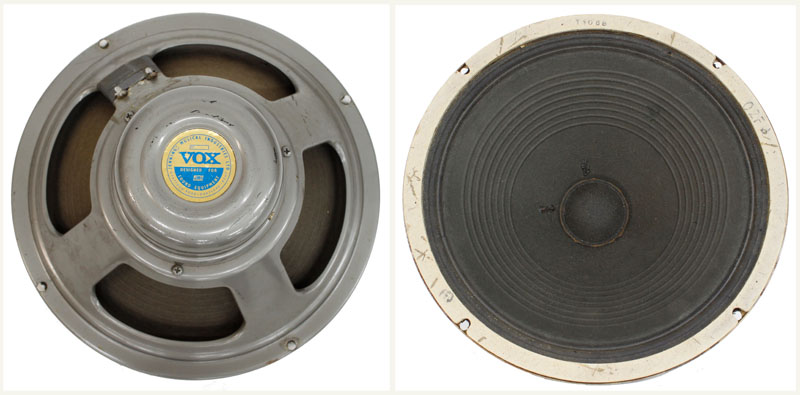
The Celestion log book - the "T" book - records that the Celestion T1088 was a Celestion T530 with a frame sprayed "poly grey" (instead of Jennings blue). A page on Celestion blues can be found here. Poly grey is normally spoken of as "silver". Impedance was 8 ohms.
Cones were for the most part bought in by Celestion from Pulsonic - the codes, stamped in white, being "H1777" preceded by a week number, or (less common) "102 003" also preceded by a week. Being paper, batches are likely to have varied slightly in character. If any "differences in response" resulted, it was evidently a matter of no importance either to Jennings or those who purchased AC30s. Perhaps only those with bat ears might have detected variations. Now, sixty years of cone sag on, other differences have come into play - but none that should cause any concern. T1088s are wonderful speakers. As in the case of the blue, responsiveness (sensitivity) is around 103dB.
The earliest T1088s definitively known at present have date codes in late May 1964. In terms of serial numbers, the earliest amps certainly fitted with the new silvers are: AC30 Super Twins number 2838 and AC30 Twin number 13666. Unfortunately there is no way to gauge whether the speakers in AC30 Twin number 13270 are original or not as the wiring has been altered.
That blues continued to be used for AC30 Twins well into the late summer of 1964 is clear enough, however, from the overview of amps with numbers in the mid and higher 14000s on this page - the latest being serial number 14678 (certainly) and possibly 14864. For Super Twins, serial number 3072.
As for other models: large box AC50 speaker cabinets had Celestion silvers from late August 1964 through to early 1965; AC100 speaker cabinets from early August 1964 to late 1967; and single speaker AC15s from around serial number 5523 - AC15 number 5522 has a blue - to the end of the run.
It is also worth mentioning that following Dick Denney's visit to Sepulveda in late October 1965, Celestion supplied large numbers of T1088s directly to Thomas Organ in the States for its solid state range of amps. The Thomas part number for these speakers was: 33-5070-6-B. Dick Denney's visit is documented in "The Vox Story", ed. Petersen and Denney, Appendix 3, pp. 141-146.

Detail of a speaker in a Thomas Organ Vox Super Beatle speaker cabinet, later 1966.
From early 1967 through to 1968, pairs of T1088s were also used in most (though not all) JMI Vox Conqueror cabinets and in a small number of late AC100 speaker cabs. Relatively few date codes from these are known at present.
1964
April 1964 (?)
The report of one (or a pair) dated 13th April 1964 made by Jim Elyea needs verification (pictures). Some of the information supplied in answer to his questionnaires was evidently incorrect unfortunately - not Jim's fault.
12th May 1964


From AC30 serial number 14334T and likely to have been original to it. Thanks to Dan for the pictures.
21st May 1964
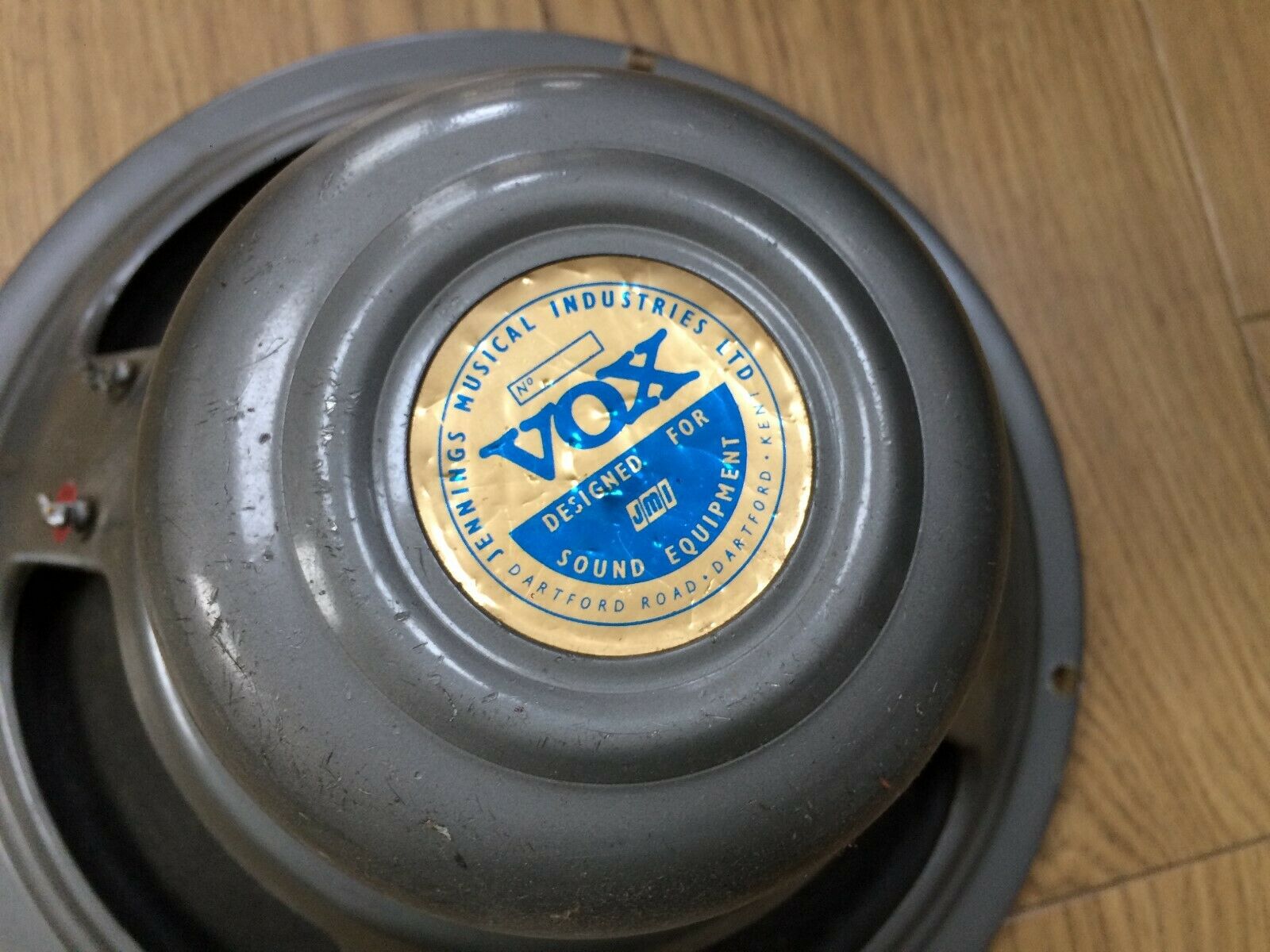
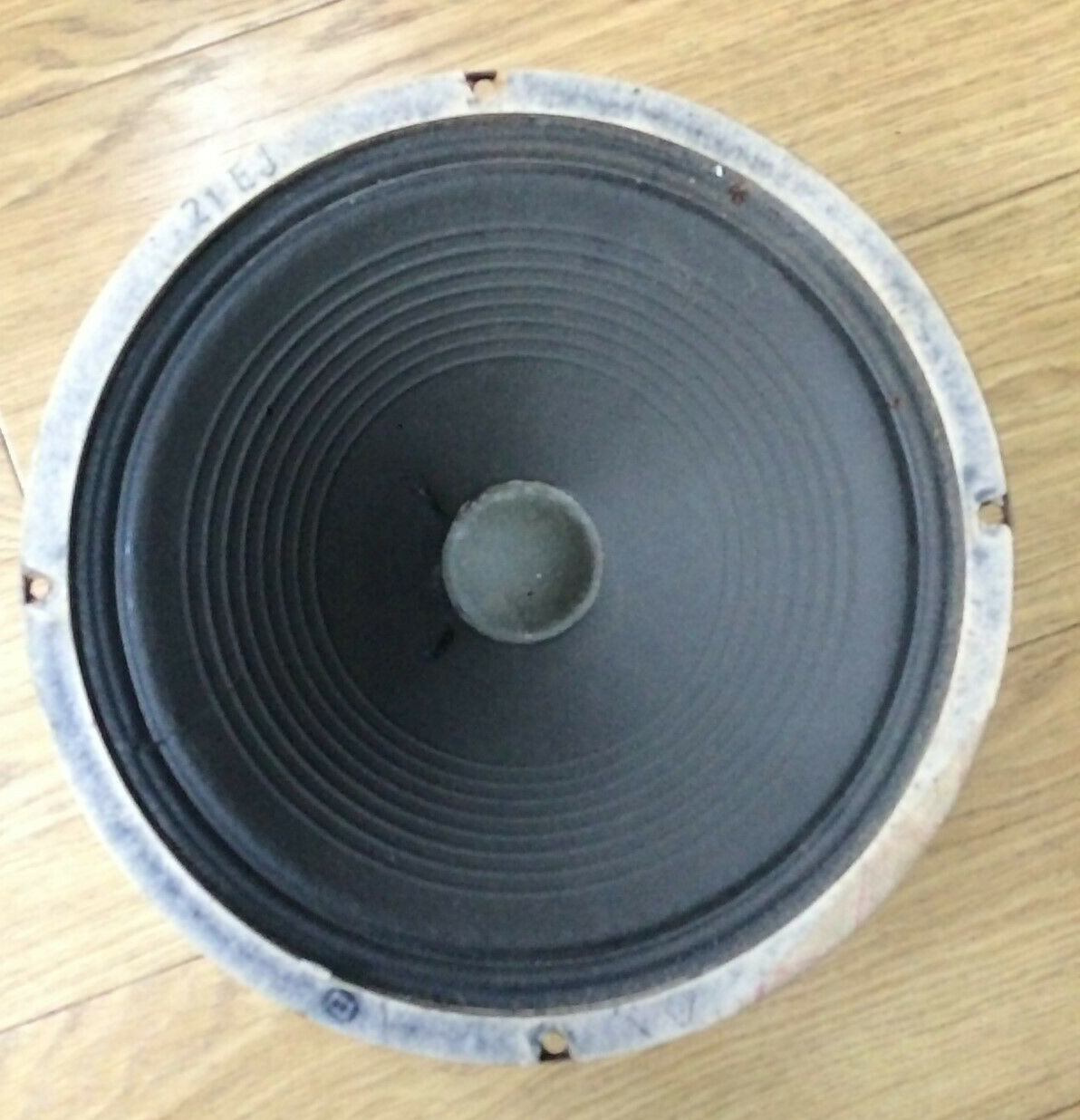
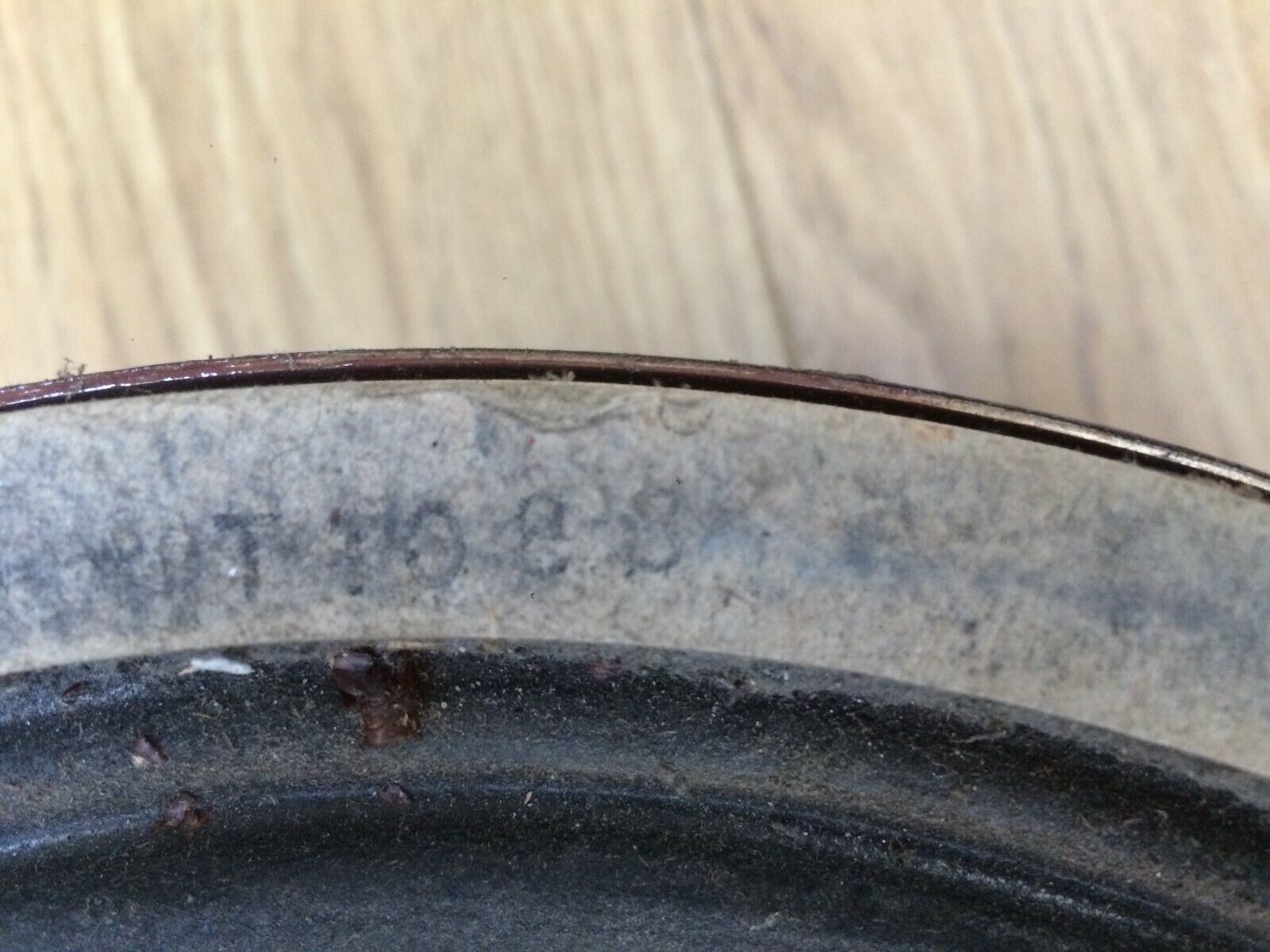
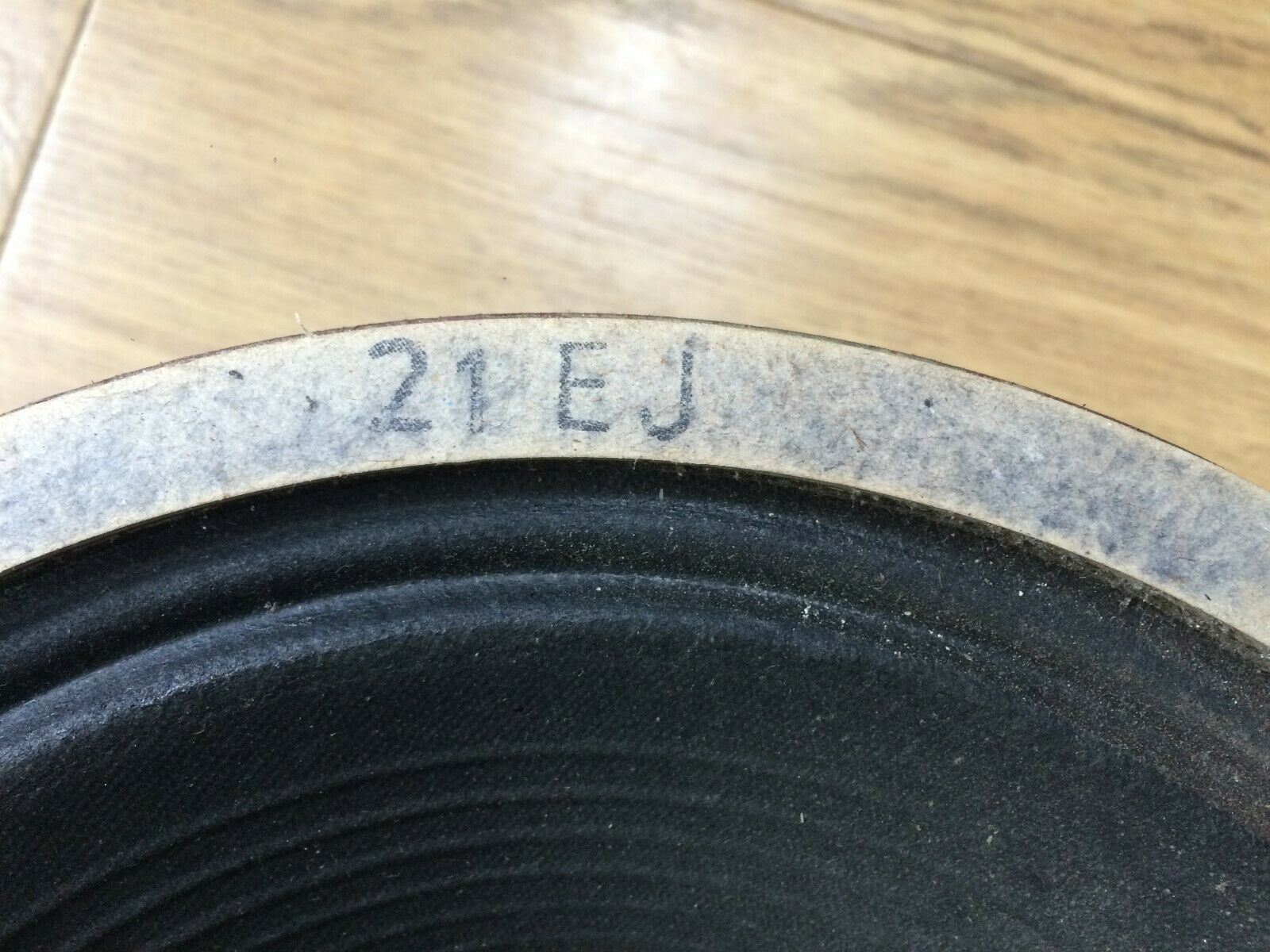
A pair of speakers dated 21st May 1964 also survives.
September to December 1964
Late blues - sometimes classed as T1088s. Below, an example with the date code "18JJ" = 18th September 1964.


9th December 1964


11th December 1964


Cone code "43H177".
1965
Early 1965
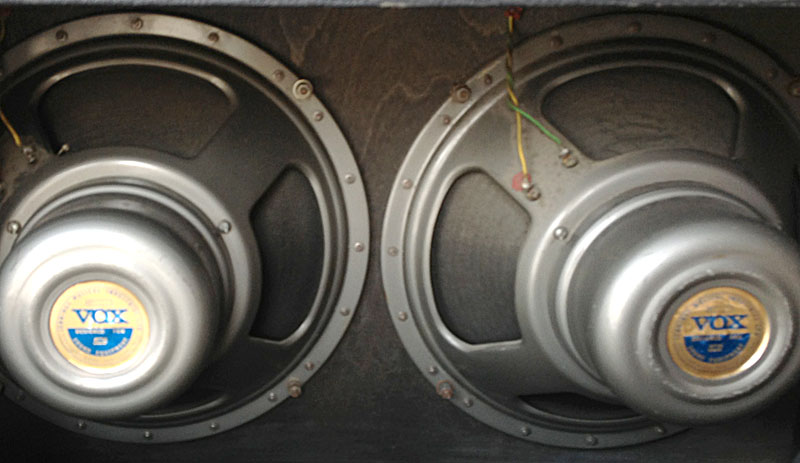
Not an AC30, but a compartment in an early AC80/100 Super de Luxe speaker cabinet. Note the regular - probably factory - fixings at close intervals around the frames.
May 1965

Again, a silver in an AC100 speaker cabinet probably issued to accompany a cathode biased amp. Pulsonic cone code either "3H1777" or "8H1777".
1966 - old-style frames
Solder terminals remain on the frame. During the course of the year boards for the terminals were introduced (see the section below). The overlap was fairly lengthy, old style frames persisting for some time.
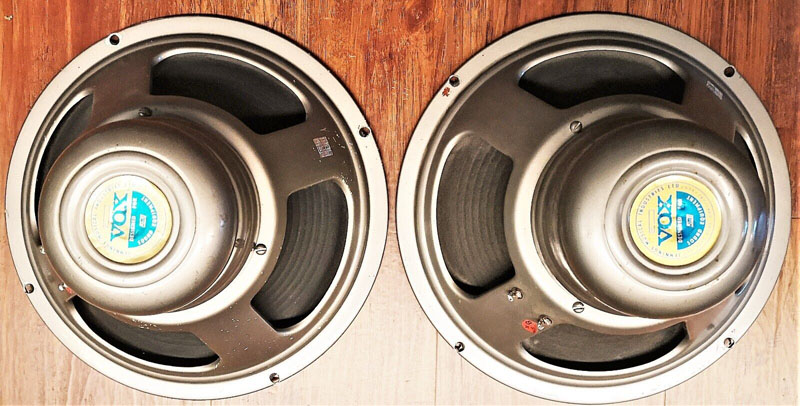

17th February 1966. Cone edges heavily doped. Cone code "10H1777".


17th (?) August 1966. Cone edges heavily doped. Cone code 102/003.
From early to mid 1966 - new frames
In the Spring of 1966 Celestion updated the T1088. Cones, more often than not supplied at this point by Kurt Mueller and designated "444", were heavily doped around their outer circumference, and solder tags were moved from the frame to a board positioned between the spokes. The first speakers seem to have been sent to Thomas Organ. Below, pictures of one with date code 23rd March, 1966:
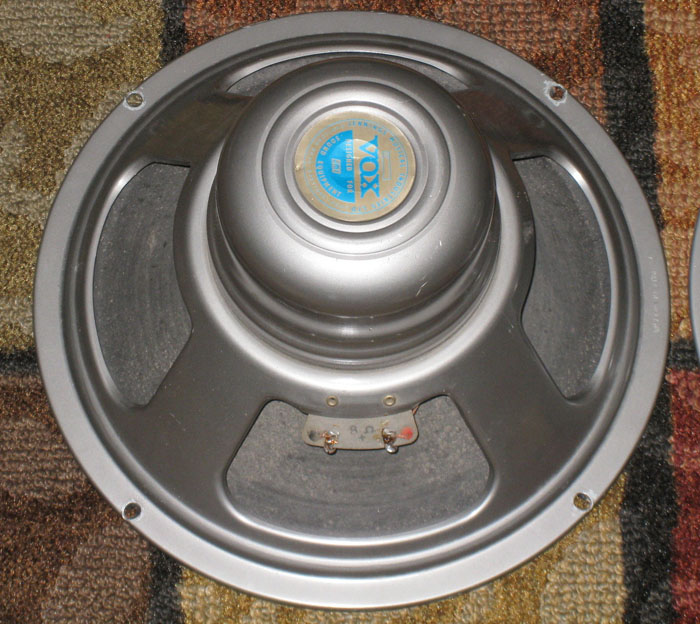
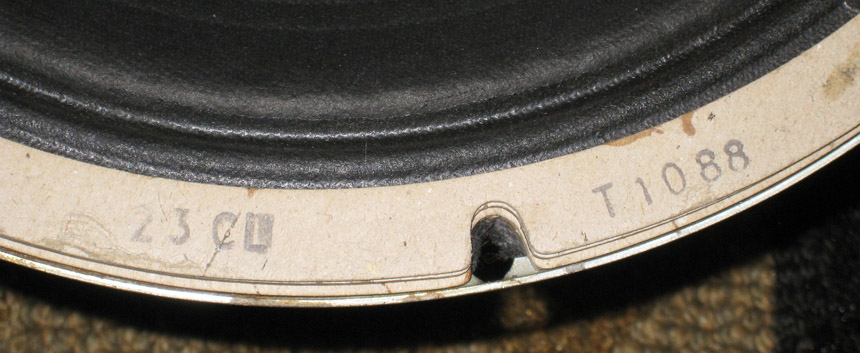
Date code "23CL" = 23rd March, 1966.
Below, pictures of AC30 Twin serial number 21202, apparently one of the earliest to be fitted with the new T1088s - date codes 18th and 19th July 1966.


Date codes "18GL" and "19GL" = 18th and 19th July, 1966.
1967
The latest T1088 currently known from a JMI source dates from early November 1967 (date code on the gasket, as in previous years) - pictures to follow. It may be, however, that examples from December 1967 and early 1968 will also come to light. So far as one can tell, all JMI AC30s continued to have poly grey frames through to the end of JMI.
The latest T1088s with date codes on their gaskets to have turned up so far in the USA are from 16th November, 1967 - "16LM" - a quad from a Super Beatle speaker cabinet.
A couple of things to bear in mind: batches of speakers bought in from Celestion are likely to have lasted longer in 1967 than in earlier years (sales had naturally slowed); and from mid December all purchases, large and small, required the approval of the official receiver. JMI had been placed in his hands when Royston Industries, which had a controlling interest in the company, went to the wall in early December '67. Speakers of course were vital for business and the receiver - R.N.D. Langdon - is unlikely to have been minded to block their purchase outright. But orders may have been strictly regulated.
Updated
1968
For a good part of the year Celestion was occupied with moving its premises from Thames Ditton to Ipswich. A number of T1088s and T1096s, the higher impedance (15 ohm) brother of the T1088, were produced however.

September 1967

Above, a T1096, poly grey finish, reconed, but the original gasket retained - date code "11JM" = 11th September 1967.
Immediately below, what must be one of the very latest Celestion T1088s to have been made ready for use in a speaker compartment or cabinet by JMI - dated "7CA" = 7th March 1968 for its manufacture in Celestion's factory in Thames Ditton.


March 1968.
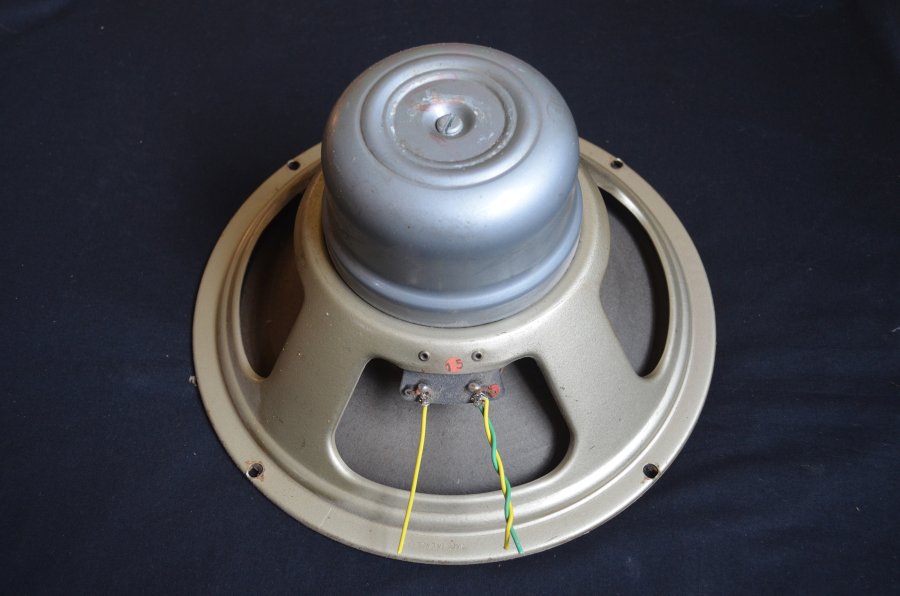
T1096, sand-coloured frame, poly-grey bell, one of three with September 1968 date codes from the same Vox Supreme cabinet as the speaker above.
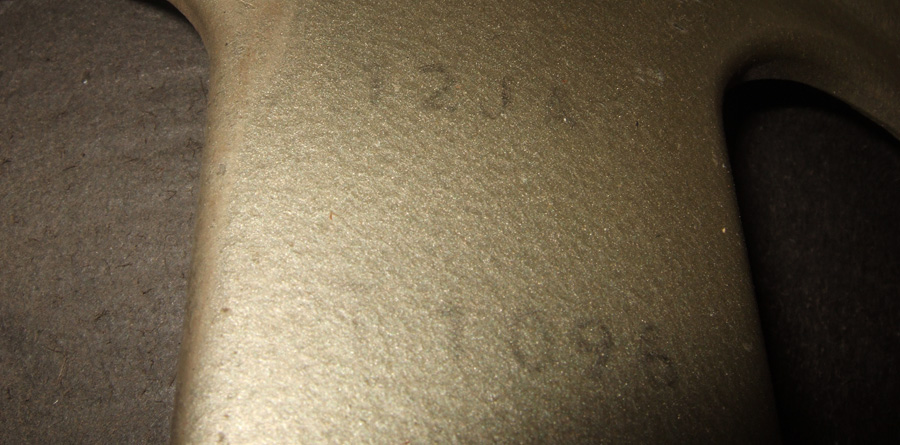
A detail from one of the three T1096s, date code and model number stamped on their frames: "12JA" = 12th September, 1968. Early date codes of this type have generally not lasted well, often fading completely.
If T1088s from 1968 do eventually turn up, it is likely that they will follow the form of the second of the two T1096s above.
In late 1968 / early 1969, a new form of stamping was brought in - see the speakers pictured below.
1969 and later
Speakers used by "Vox Sound Equipment Limited" and "EME" (Italy)
A new form of stamping for date code and model number, and a new type of date code, the sequence of elements being Month (letter) / Year (letter) / Day Number (number). A letter (added simply for administrative purposes) often follows.
Below, Italian-made AC30 Twin serial number 5450TB, its Celestion T1088s dated 7th May 1969 - "EB7".

AC30 Twin serial number 5450TB
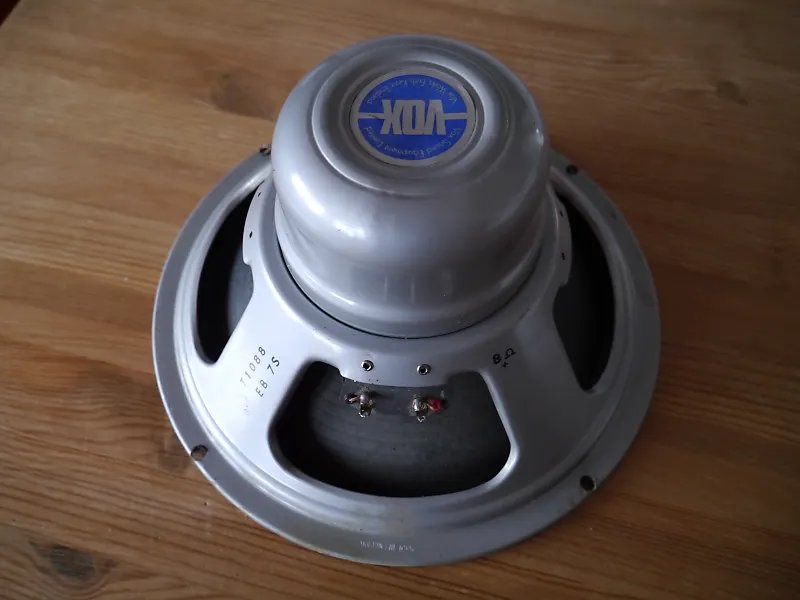
As above, "EB7" = 7th May, 1969, "Vox Sound Equipment Limited", original context unknown.

T1096 also from May 1969 - speakers used in the "Jennings Electronic Industries" AC40.
Further examples through to 1972 can be found on this page.