
Documents - Jennings Organs, 1954
For the time being, this page will simply cover the larger organs offered by the "Jennings Organ Company" in 1954. Notes relating to the "Univox", the portable keyboard and amplifier released in 1952, will come a little later. Simply to say that work done on the "Univox" by the reclusive Les Hills, Robert Whittington, Geoff Harris, and Derek Underdown - the engineering team at Jennings - paid dividends when it came to the development of the larger organs, a process that began in 1953. At least six patents for various elements - oscillator circuits, drawbar mechanisms, and so on - were submitted and subsequently approved during the period 1951-1957.
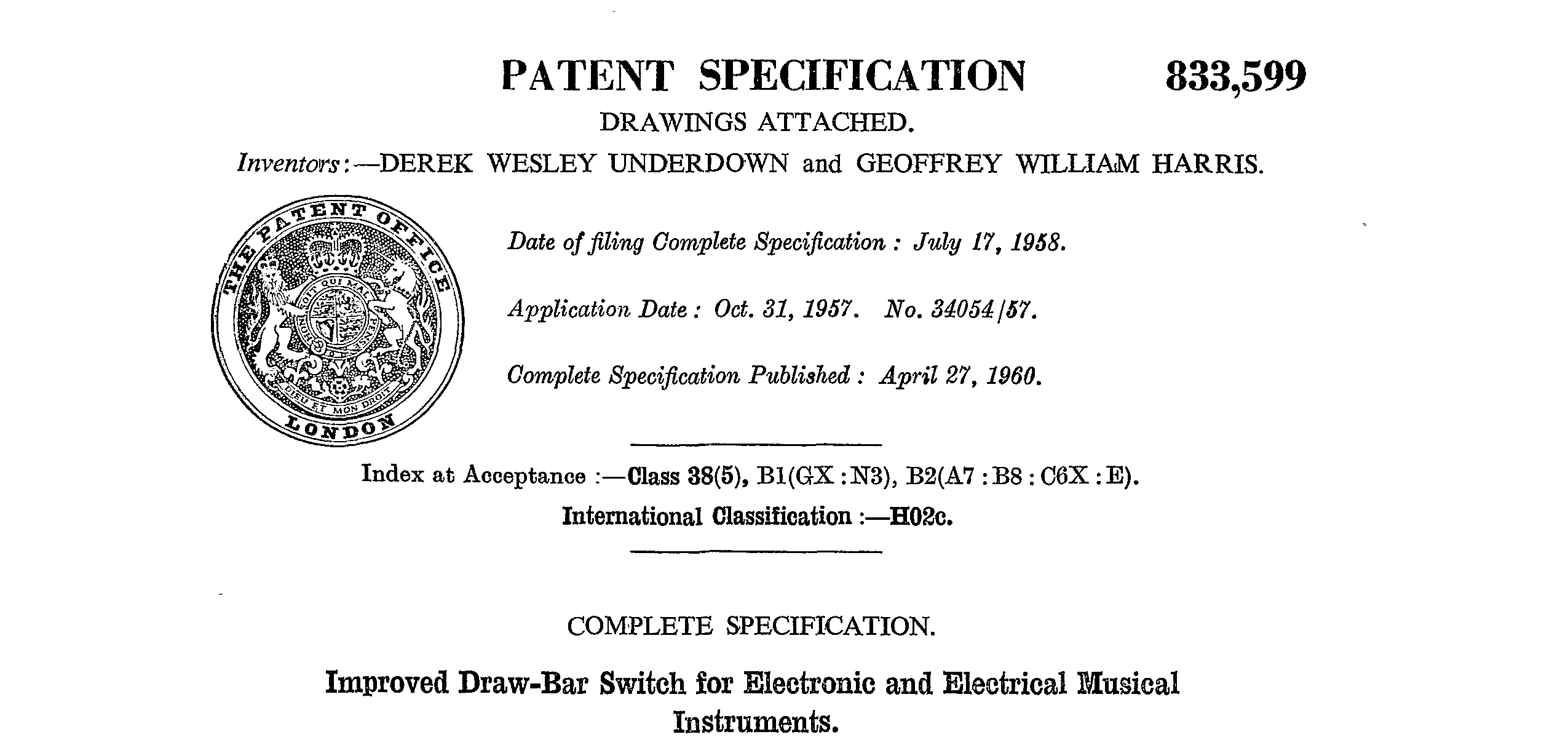
A patent relatively late in the early sequence. Derek Underdown and Geoff Harris - a new design for a draw-bar switch.
£20,000 - a huge amount at the time - is said to have been spent developing the three organs initially chosen for production - see the "Melody Maker" review, 1st May, further down this page. So far as one can judge, the design process began at least as far back as early 1953 - at least one of the organs was displayed at the "British Industries Fair in 1953 - see this page.
In 1959, a Jennings advert named four companies that collaborated in the production of its organs: "Modern Telephone Ltd"; "Colburn Radio Ltd"; "Automatic Piano Actions"; and "Kimber-Allen". Of these, "Kimber-Allen", with works in Swanley (Kent) and South London, had the longest association. "Colburn Radio" was in fact the "Colben Radio and Engineering Company Limited" of Crayford. Two members of Colben later worked for JMI - Jim Cole, founder of Colben, designed the early in-house echo units (i.e. those not bought in from Meazzi); and Alan Harding became Derek Underdown's right hand man and lead engineer on various projects, the JMI radio microphone system being one of many over the years.
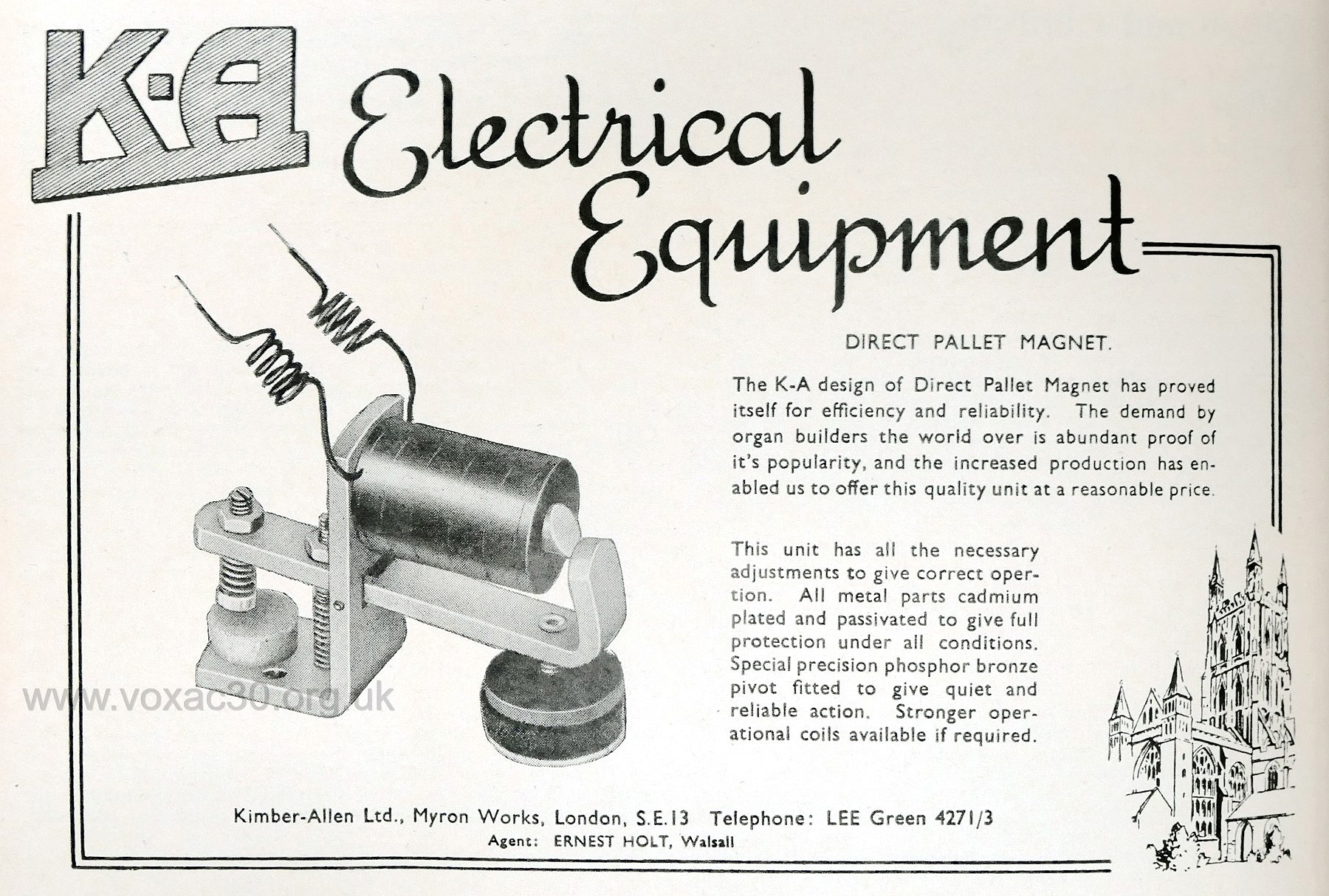
An advert placed by Kimber in the "Organ World" section of a 1950s magazine. Regularly depicted in promotional matter, a handsome cathedral rather than a church of more familiar proportions.
As in 1955, the largest public event in the year was the "British Industries Fair" (3rd-14th May, 1954), held in Birmingham and London. Jennings exhibited at Olympia. A page on the stand can be found here. The organs shown were the J50 "Home Organ", the J51 "Streamline Organ", and J52 "Church Organ". All three "J" types - "console" organs - were double manual with built-in valve amplifier sections designed by Derek Underdown. Speakers faced the organist. In fairly short order, "B" versions superceded versions with no suffix, e.g. the J50B followed the J50 - in this case before 1954 had come to an end.

A picture taken by Derek Underdown probably of the Jennings stand at the Trade Fair, London, Olympia, May 1954 - printed in Jim Elyea's superb book on Vox Amplifiers, p. 111 (the date assigned there a little early though). There is no sign of the J48 organ, featured in the 1955 show.
As noted on the page on 1955, Eric Easton, an accomplished organist and later manager of the Rolling Stones, was brought in by Tom to endorse and demonstrate the company's organs, in particular the J51.
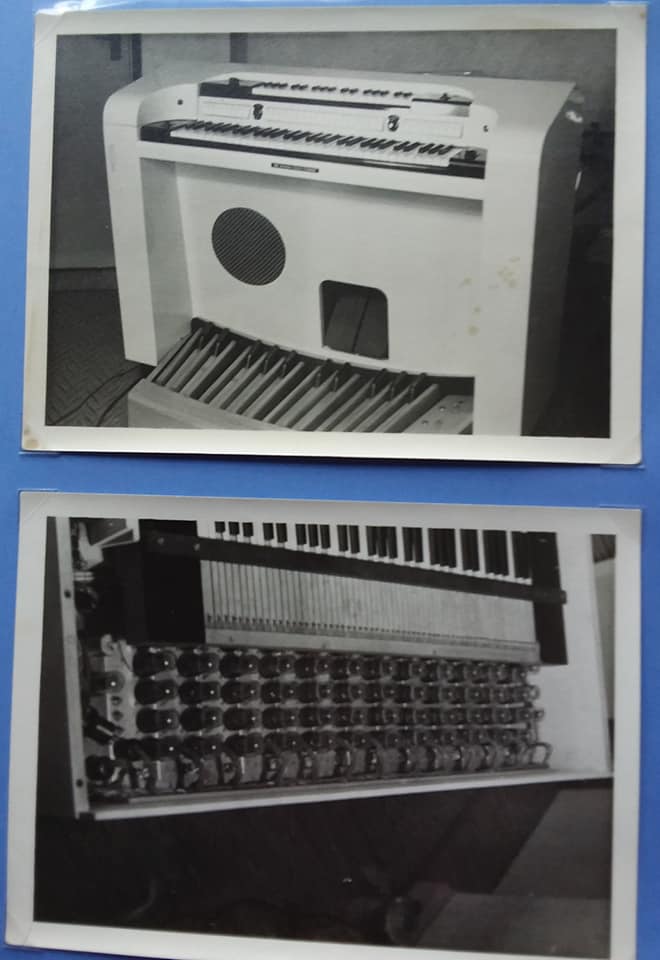
A Jennings J51 at Dartford Road. Picture by Toni Standing of a page in Derek Underdown's album.
In December 1957, the roster of countries to which Jennings had exported was recorded as being: Italy, Belgium, Canada, America, Finland, Australia, South Africa and New Zealand. Clearly in 1954 sales were still in their infancy, but during the course of 1955 and 1956 business intensified massively - and in the face of increasingly stiff competition not only from the likes of Selmer and Compton, but sellers of American-made units (Thomas Organ and so on) too. Selmer, never afraid of a challenge, embarked on a massive advertising campaign for its range; but Jennings had the edge thanks principally to its superior team of designers and promoters. A network of distributors played their part also (more on them to come). But in 1954 Jennings was still "sole manufacturer and distributor".
Pages on 1955-1958 can be found here. Other years will follow soon. A sequence of pages on guitar amplifiers, beginning with 1957, starts here.
Images for the time being have to be watermarked. If anyone needs an unmarked one, do let me know.
1954
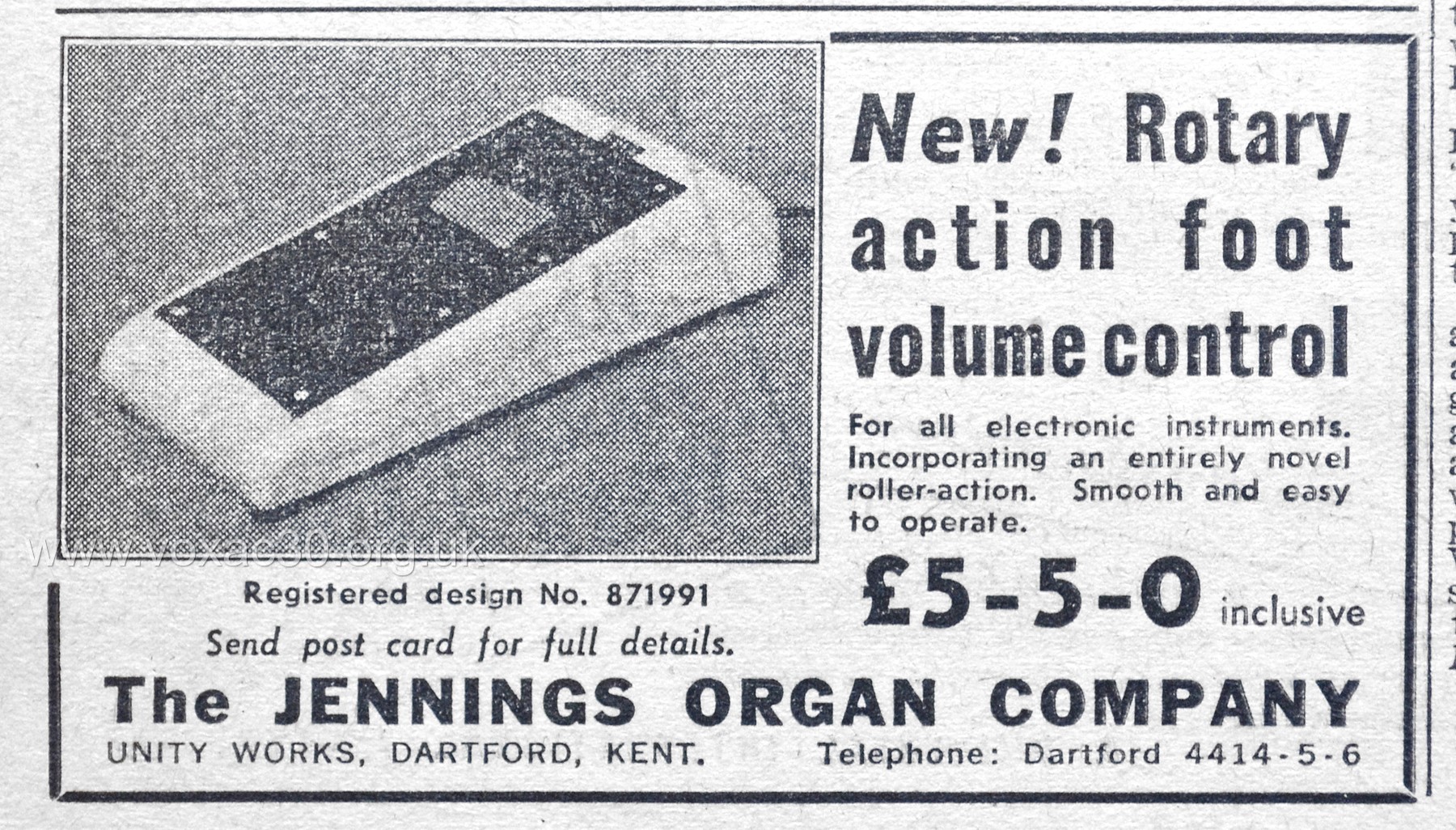
"Melody Maker" magazine, 2nd January, 1954. Jennings and Selmer often played "leapfrog" in the mid 1950s, a design by one emulated soon after by the other. Note that this foot pedal, shown at the British Industries Fair in May 1954 (see the ad below), is a "Registered" design, meaning that its appearance and mechanical elements were protected in law, but not its electronics. In late Spring 1968, having been dismissed from JMI in late 1967, Tom Jennings set up a new company - "Jennings Electronic Developments". Rotary footpedals were among the first things produced.
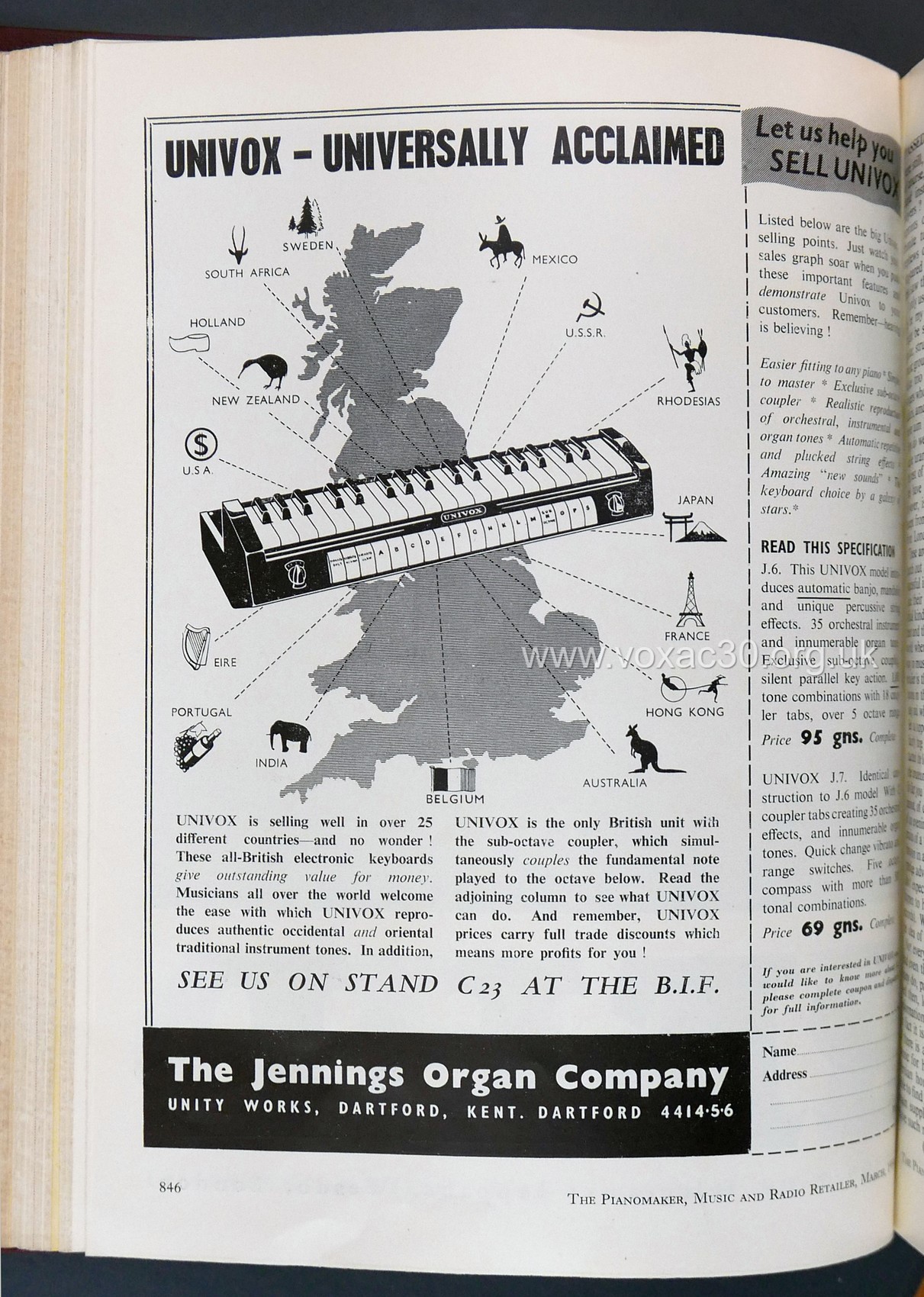
Jennings advert, music trade press, March 1954 - a note of the forthcoming British Industries Fair, but the new organs still under wraps.
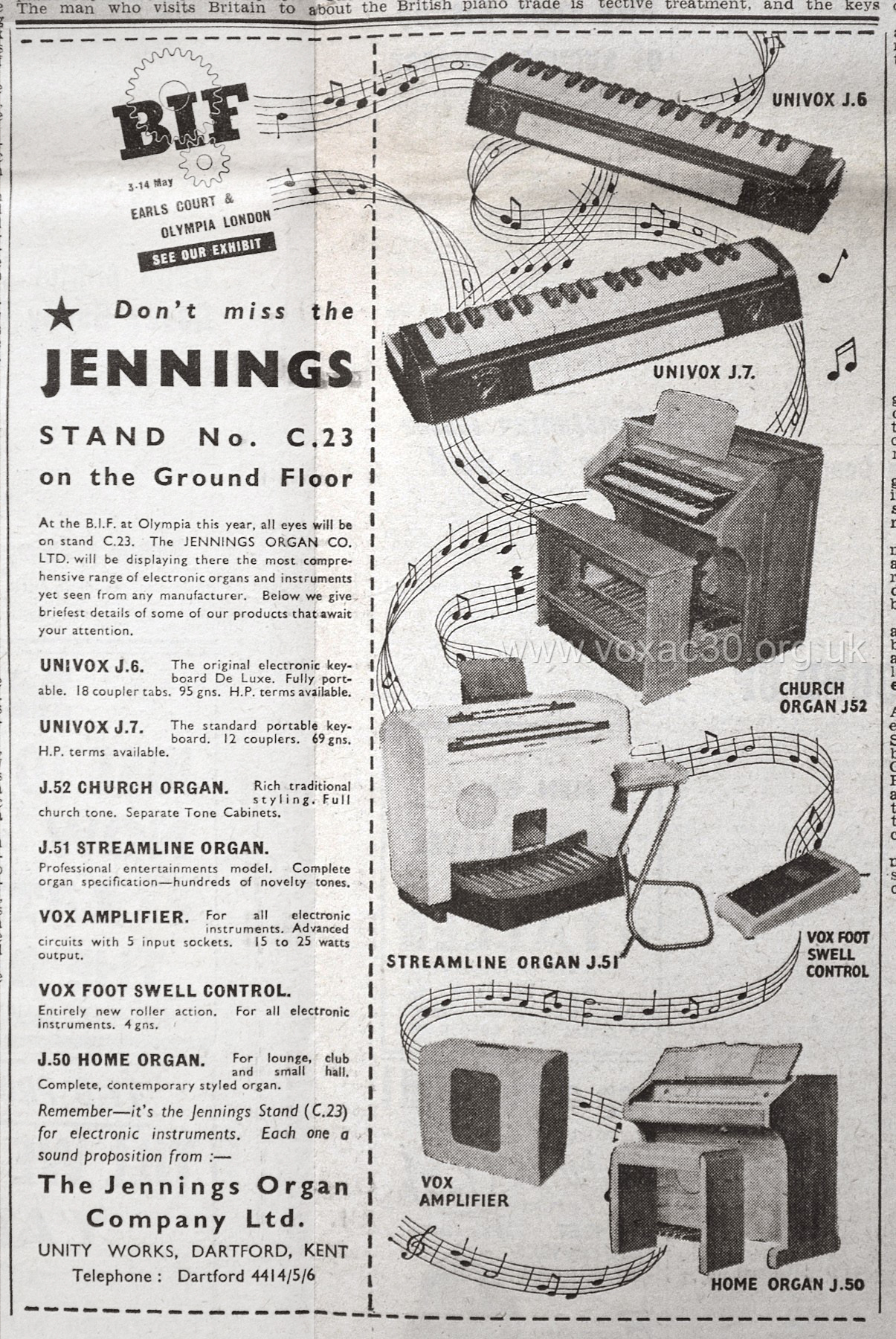
"Melody Maker" magazine, 1st May, 1954. Note that there are optional tone cabinets for the J52.
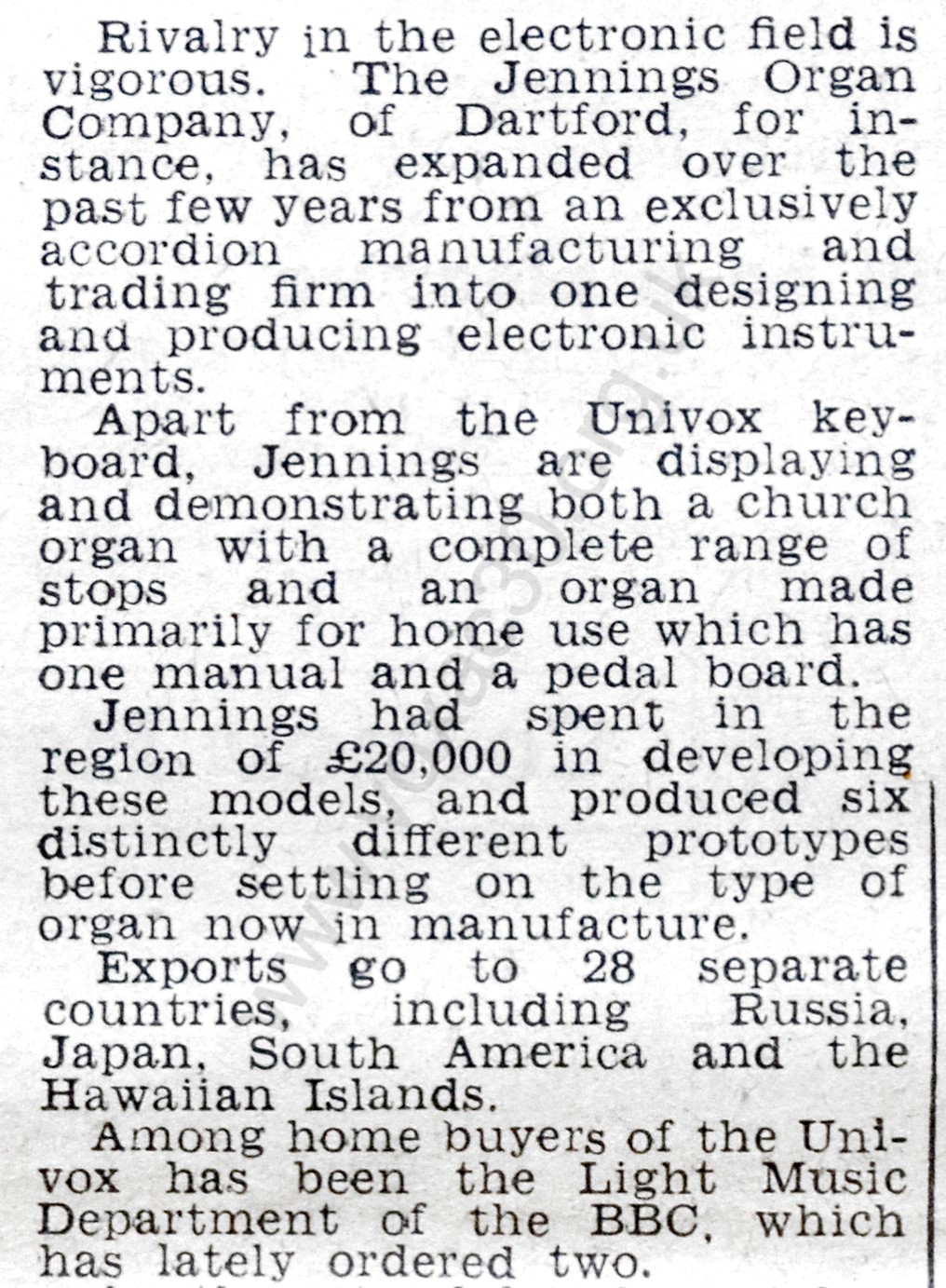
"Melody Maker" magazine, 1st May, 1954, part of the review of the exhibition.
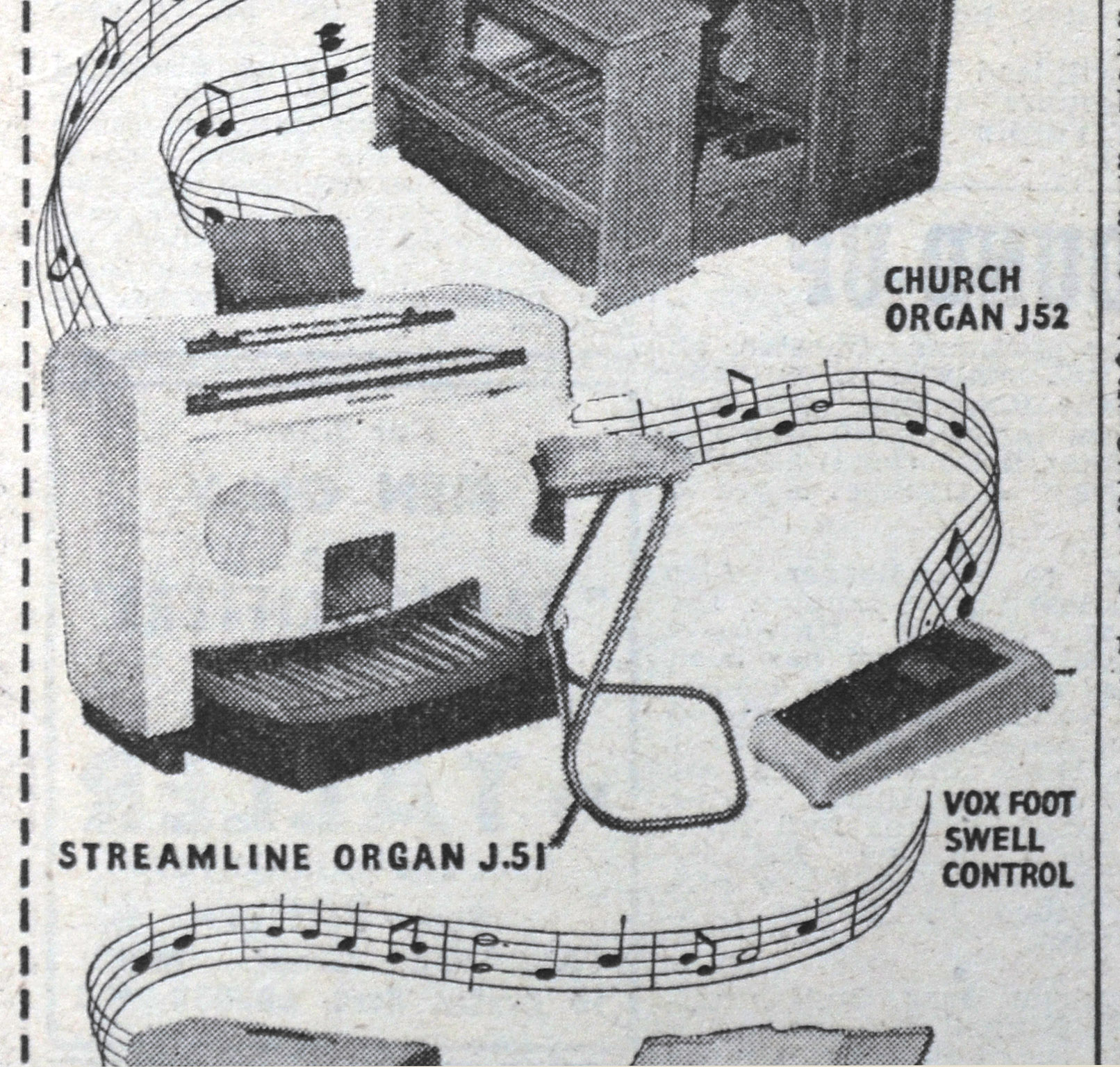
A detail of the above, the J51 and Vox Foot Swell Control.
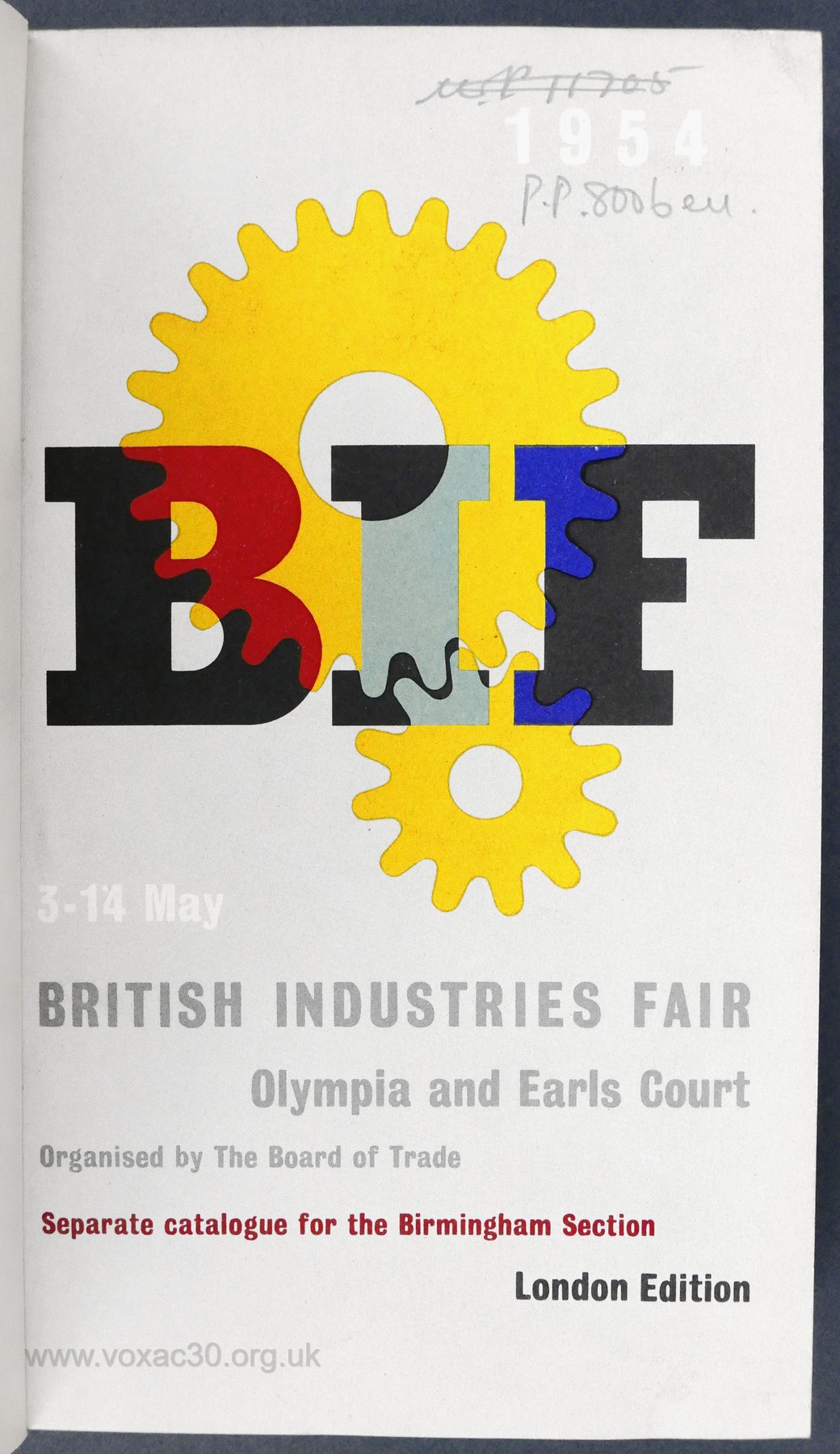
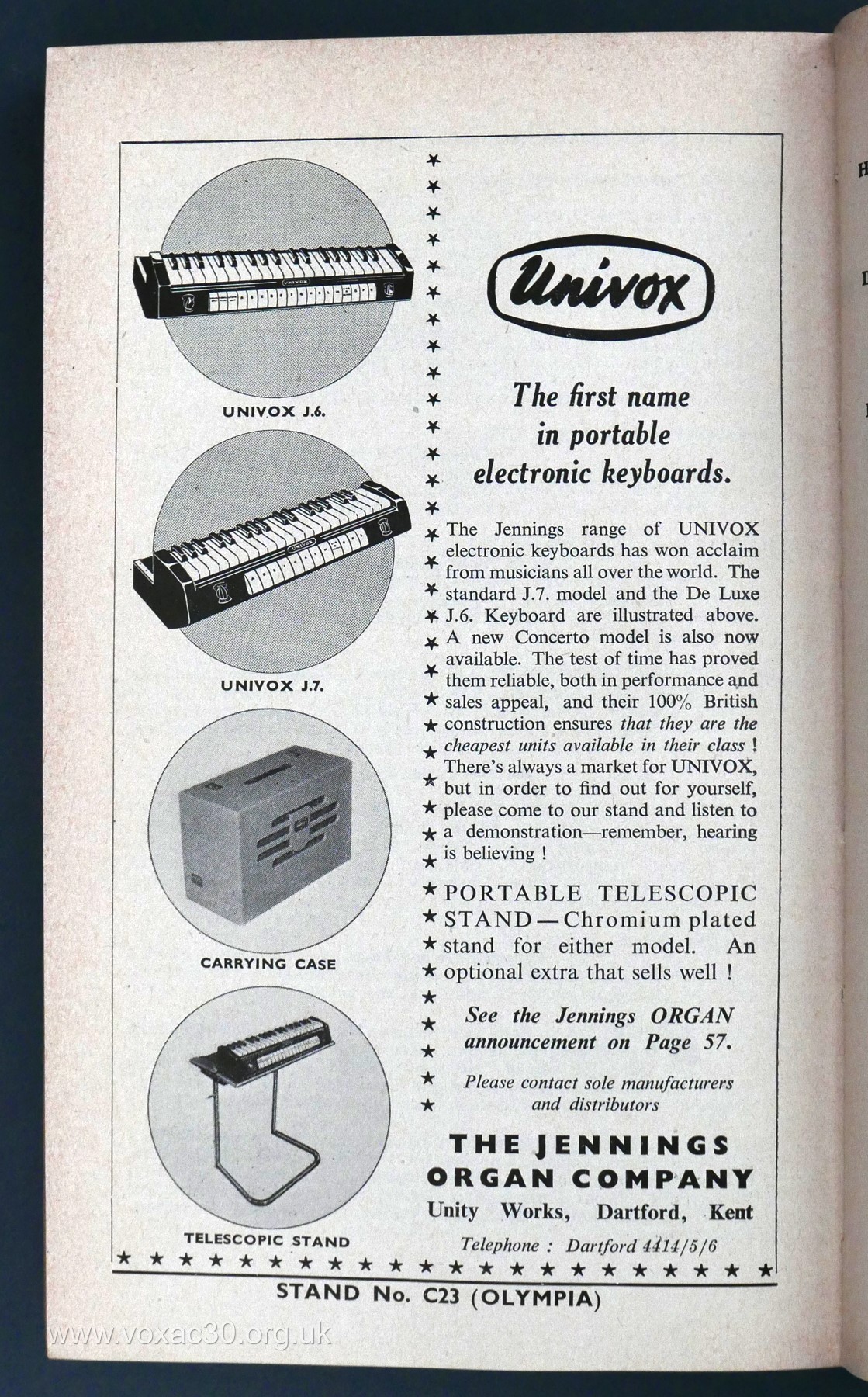
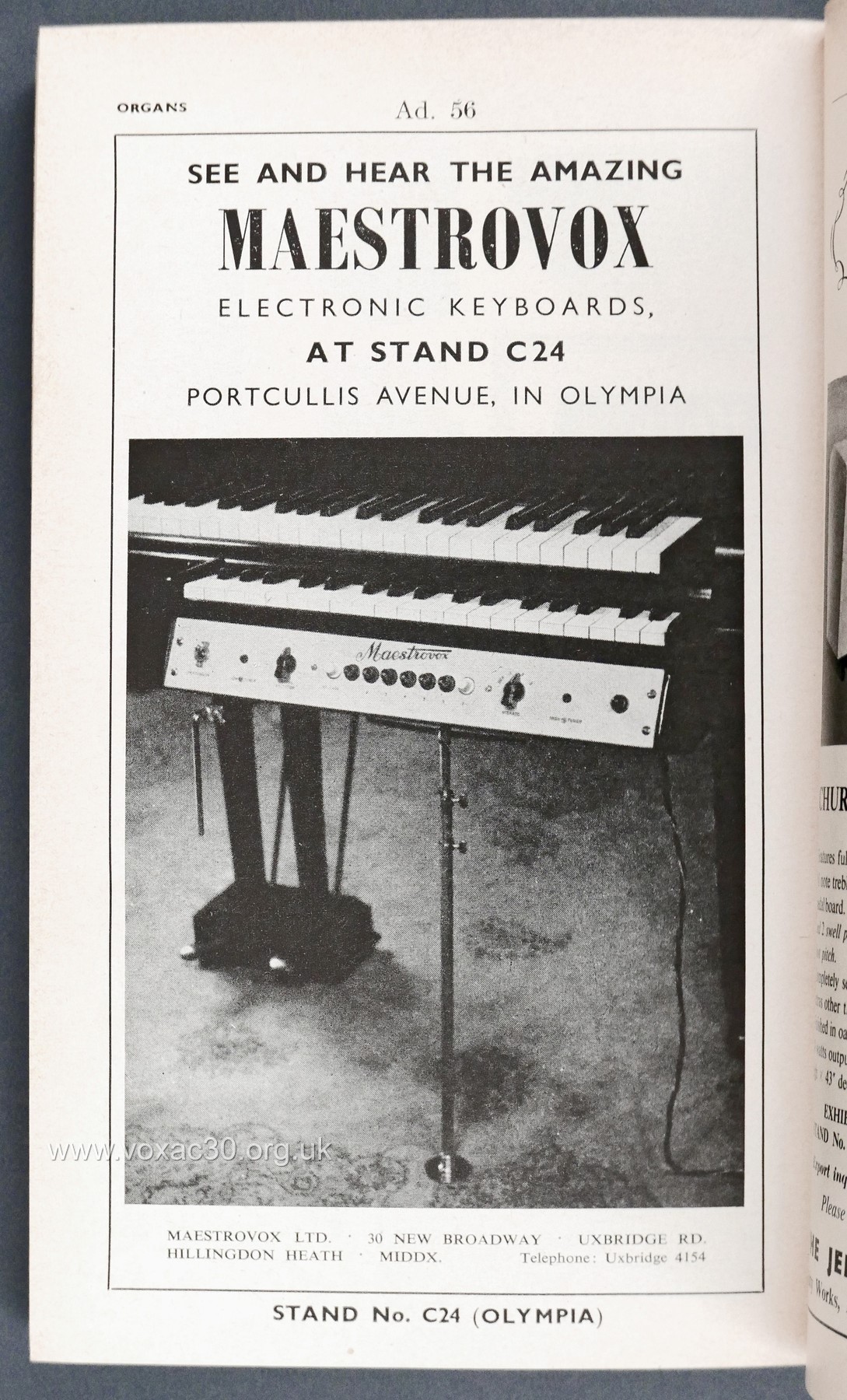
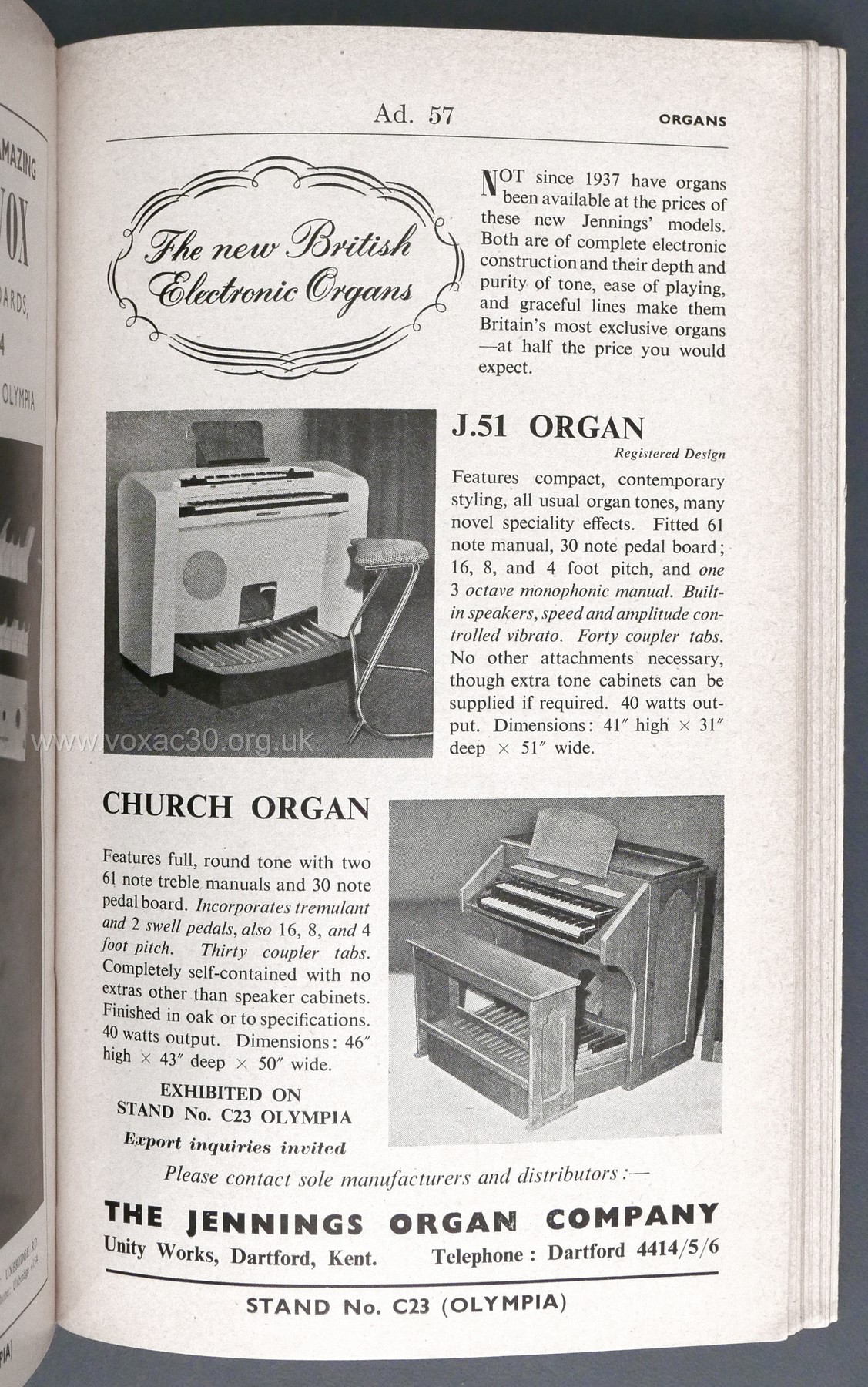
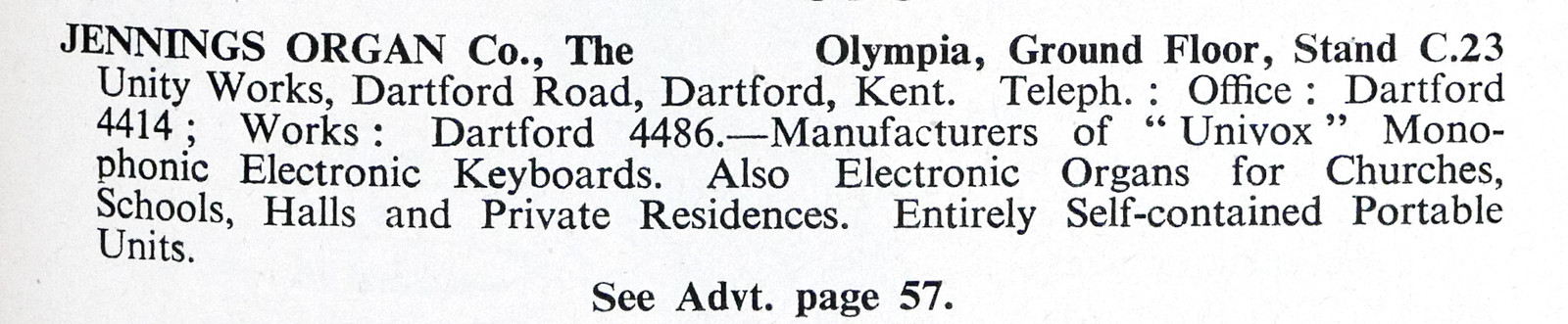
Pages from the catalogue of the London venues, British Industries Fair, May 1953. The advert for the "Maestrovox" (nothing to do with Jennings) is opposite the page for Jennings organs - probably a source of some annoyance. The two Jennings pages are also on Grace's Guide. Thanks to Bill Atkins for indicating the existence of these pages.
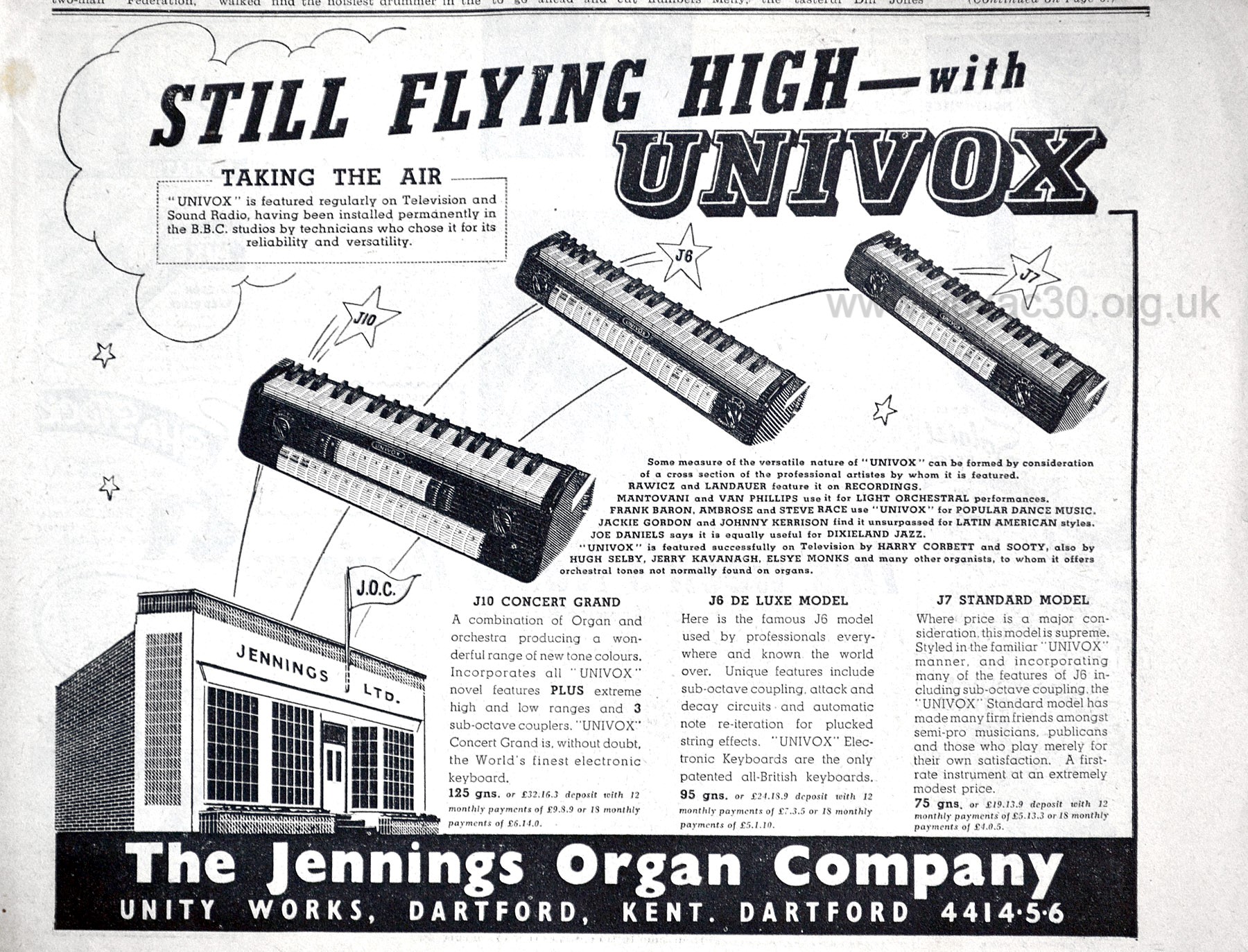
"Melody Maker", 6th November, 1954, a flight of Univoxes over 115 Dartford Road (much artistic license in the rendering of the facade).
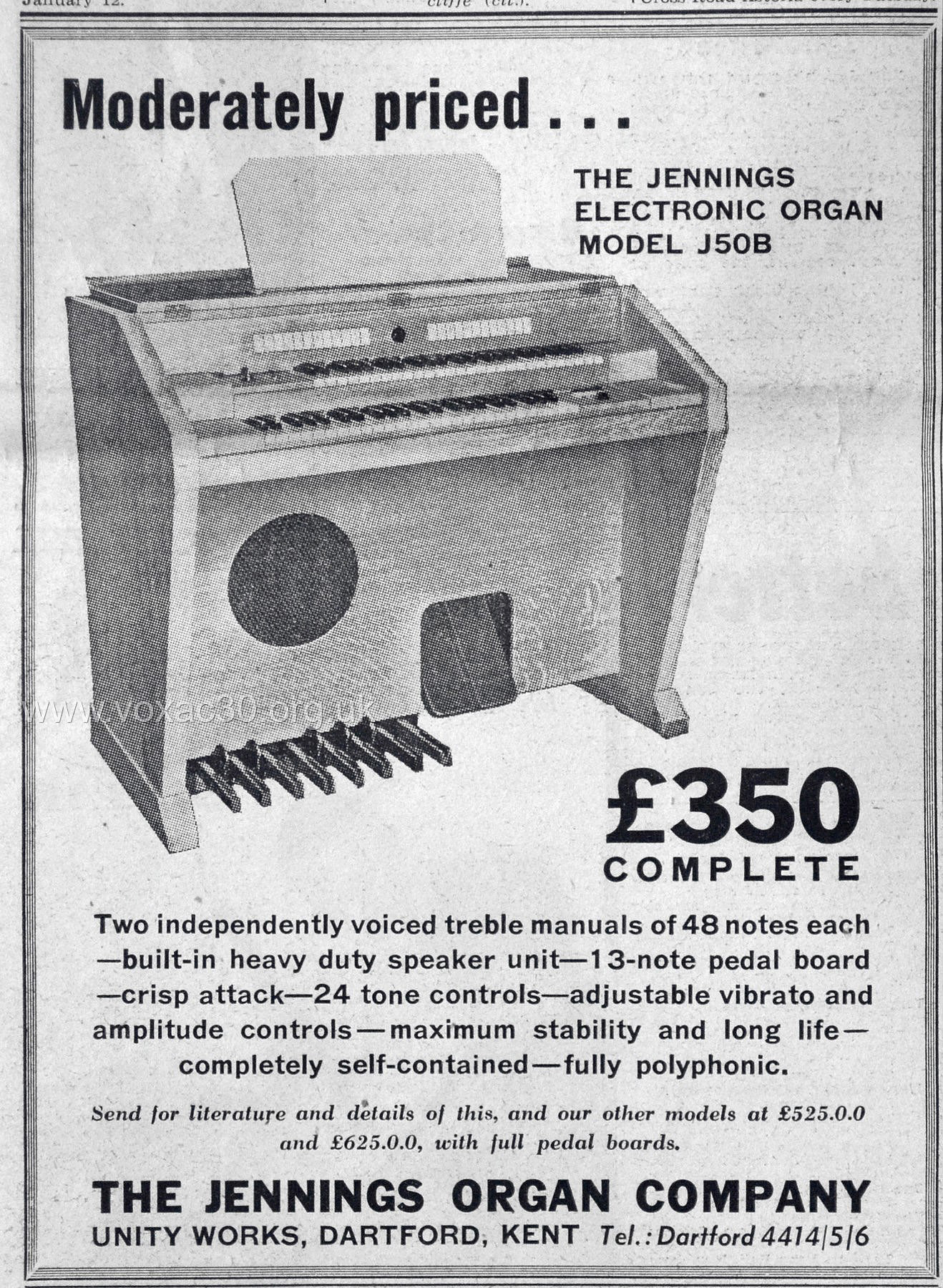
"Melody Maker" magazine, 4th December 1954. The new J50B, tone controls redesigned - compare with the image of the J50 in the advert for the British Industries Fair.
Documents relating to Jennings (Vox) guitar amplifiers, 1958