
Vox AC30 website updates
March 2026
31st March
A page has now been started on Re-an jack sockets, used principally by JMI for smaller amplifiers from late 1958 to mid 1963, the move to Rendar coming at different points for different models: AC2, AC4, AC6, AC10, and AC/30.
JMI continued to use Re-an sockets for plug-in guitar boosters, old-style "Cliff Richard" Reverb units, and a couple of other smaller applications, into 1967.
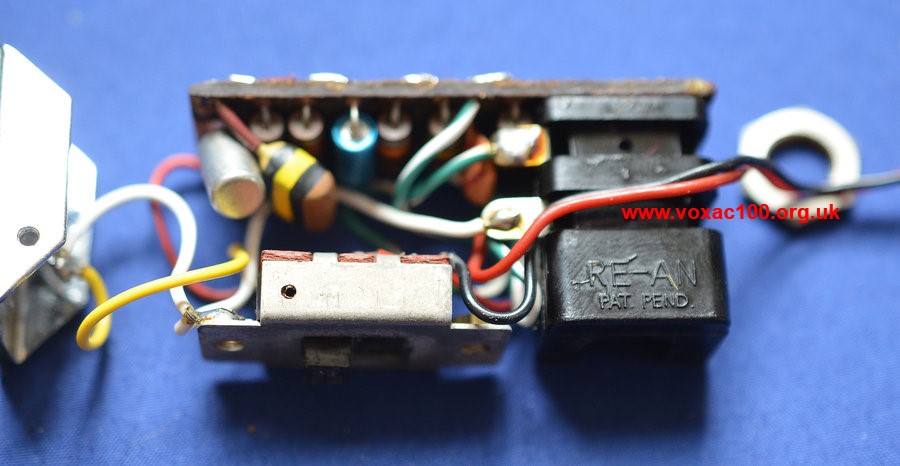
The electronics of a JMI Treble booster from c. 1965.
28th March
A couple of useful points of reference: AC30 Twin serial number 17072 has a Woden choke with the date code "AW" = January 1965 for its manufacture. Serial number 17086 has "BW" = February 1965. Pictures to follow.
23rd March
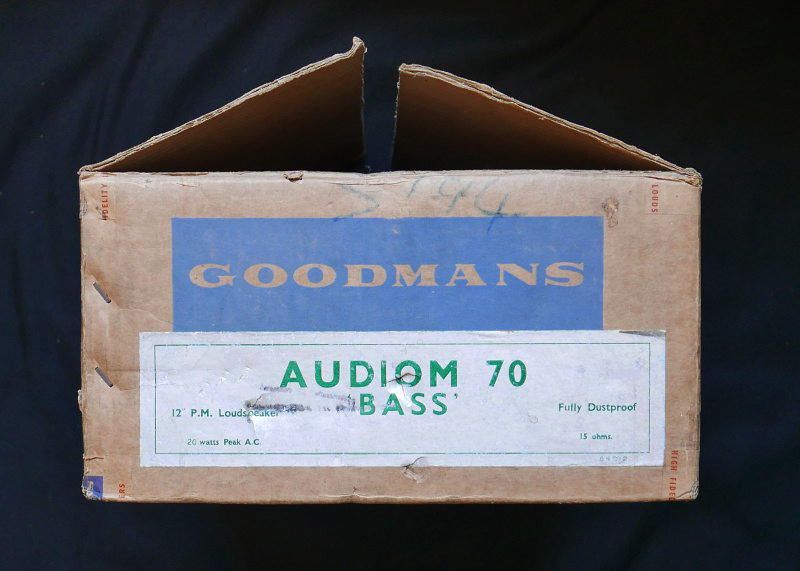
A Goodmans Audiom 70 of the type used in certain Jennings console organs. Its original heavy-duty cardboard shipping box survives. It seems unlikely that Audiom 70s were ever used in guitar amplifiers however - they are fearsomely heavy for their size.
The Audiom 60 was generally Jennings's preference early on for AC15s and later a number of AC30s, primarily normal resonance (blue label), only one genuine example so far of bass (red label): AC15 serial number 4254.
One very early AC15 has an Audiom 50 (10 watts handling, 15 ohms). The dust cover assembly and label are of the older Goodmans type; wiring looks to be original, though currently no shot of the solder joints. Whether Jennings would have sent a 15 watt amp out into the world with a 10 watt speaker when 15 watt drivers (from various manufacturers) were readily available is the question.
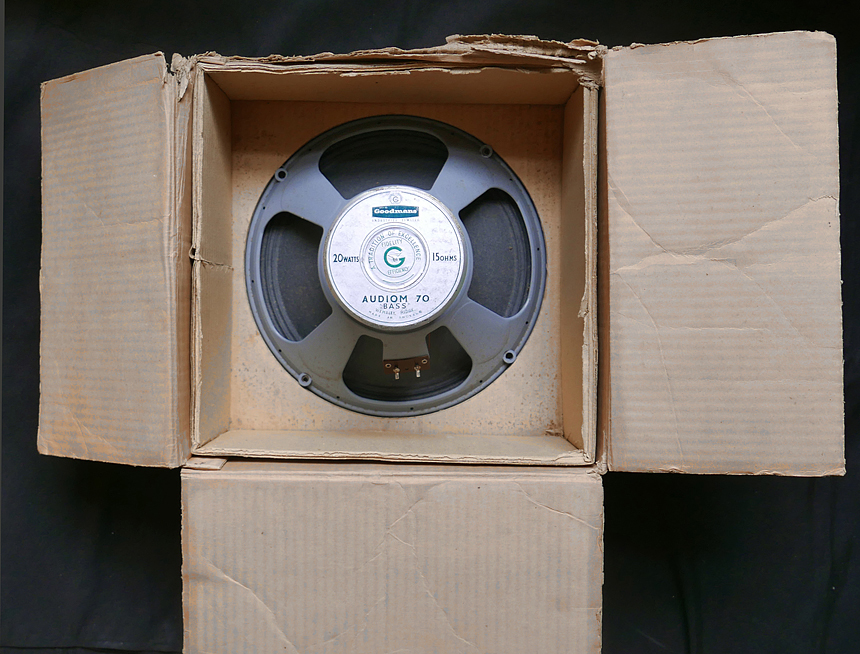
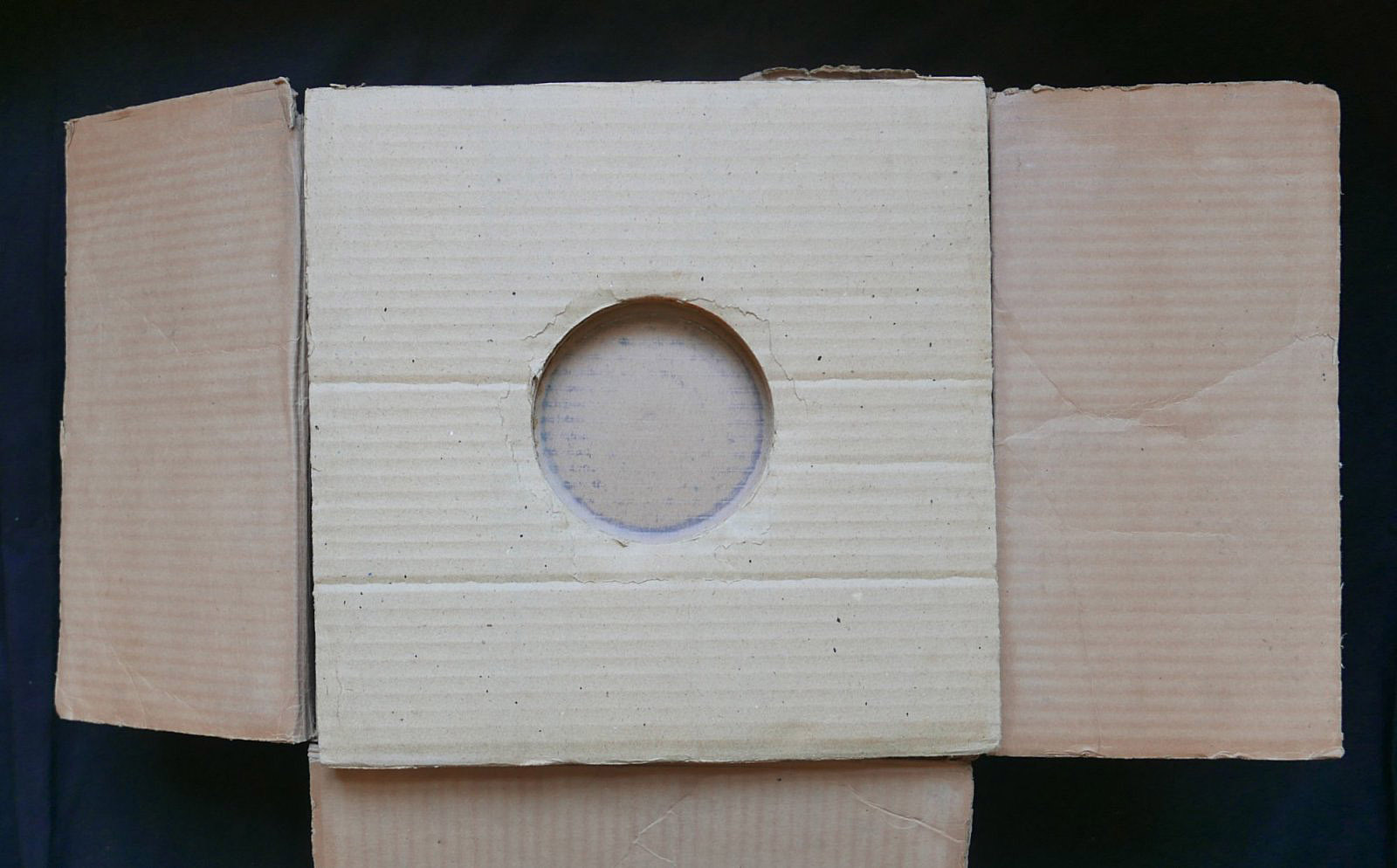
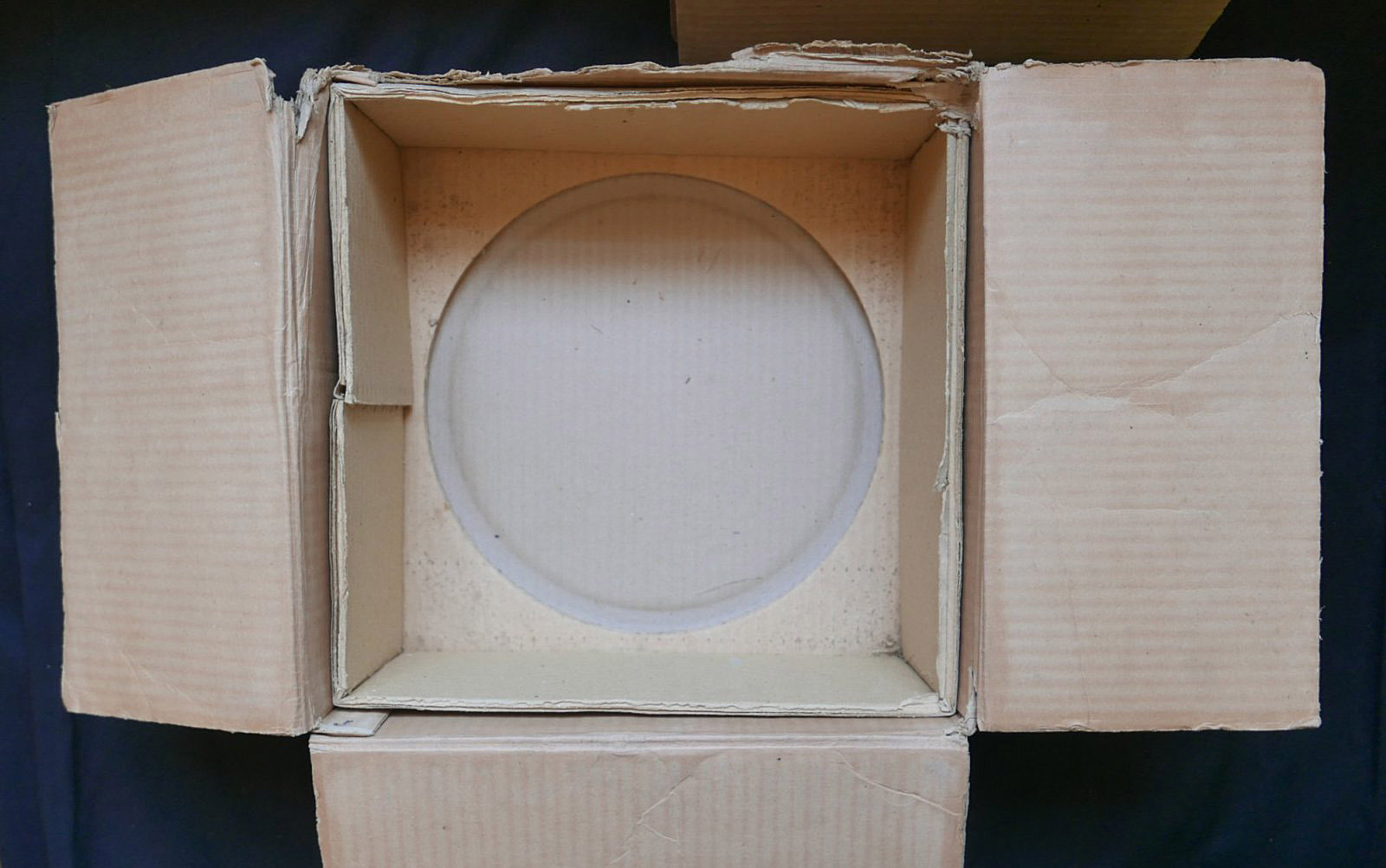
Left, three squares of cardboard stuck together and cut out to fit over the speaker end cap; right, the base: two sheets of cardboard similarly treated to secure the speaker rim.
20th March (2)
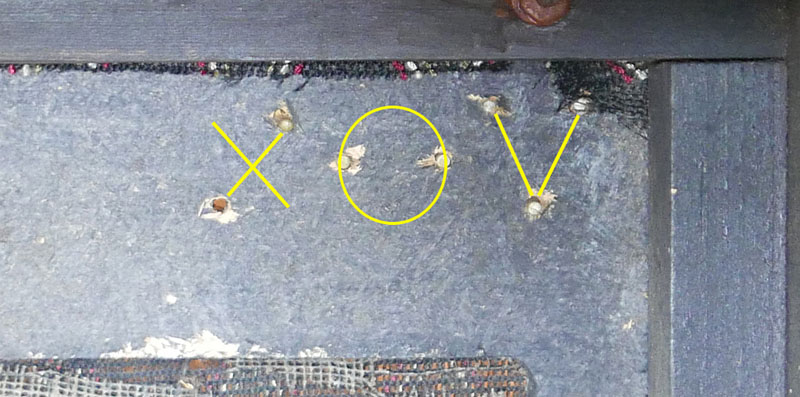
The other side of the baffle of the AC100 with a logo composed of small single letters pictured below. The "V" has three lugs, the "O" two, and the "X" two. Please forgive the rough and ready outlines.
20th March
A little more on small single-letter logos. Below, a shot of the remaining letters on a Vox AC100 from the late summer of 1965 (circuit conforming to the "100W Amplifier" sheet). The "X" in this instance clearly had two lugs, one top left, one lower right. Other examples of the small single "X" have a single lug at the intersection of the arms, perhaps having been cut away from a small single-piece logo which had lugs only for the "V" and "X".
Single-letter logos are uncommon on AC100s. At present just seven are known, at least two of which will probably not emerge from their hiding place for some time yet (but they are known from photos).
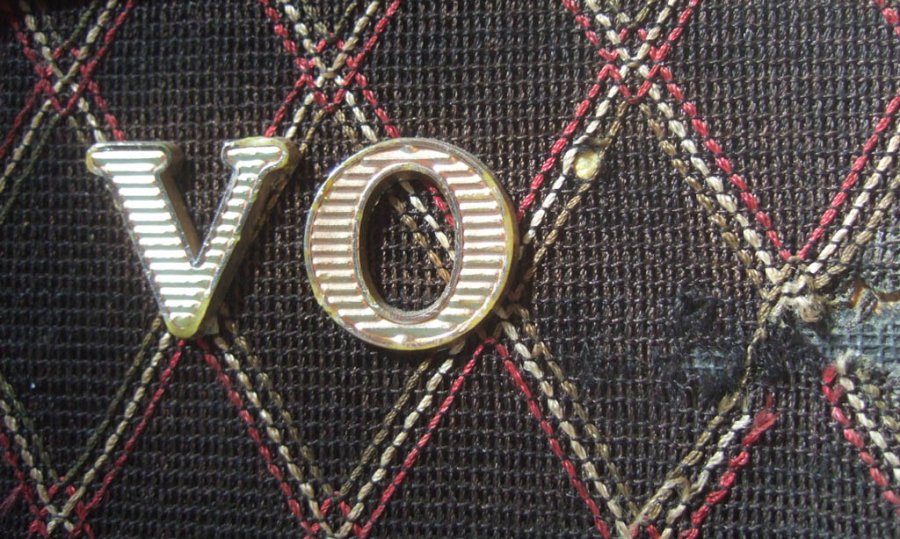
AC100, serial number somewhere in the 600s (plate gone).
19th March
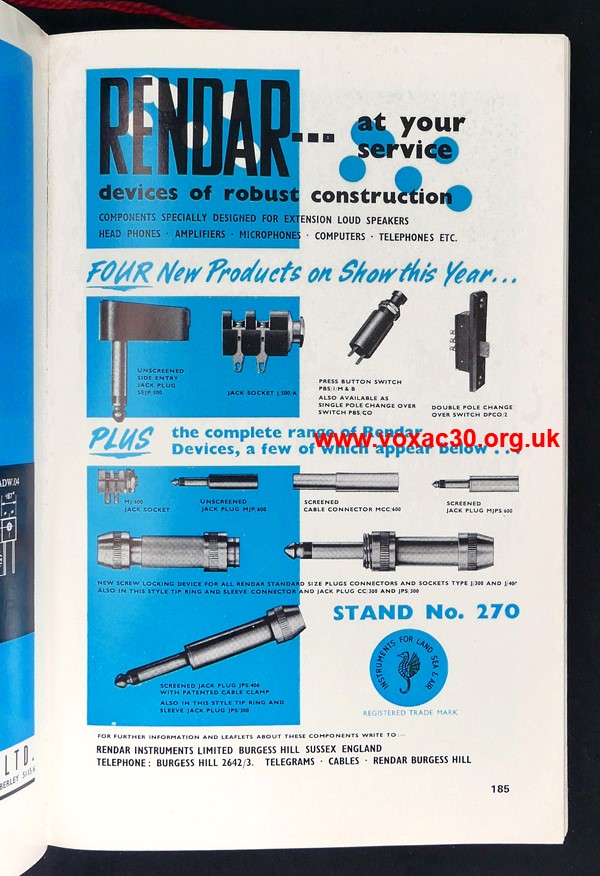
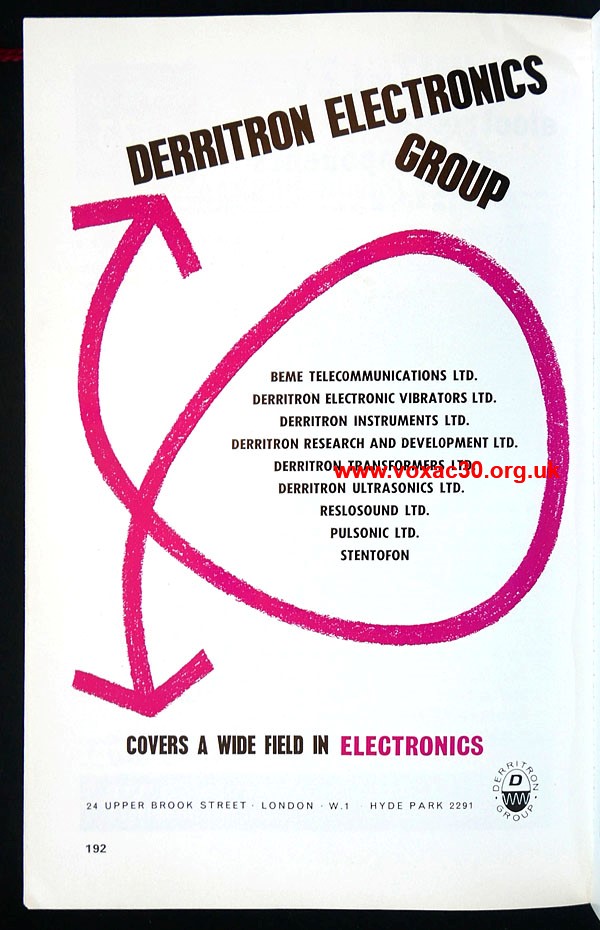
Two ads from the catalogue of the Electronic Components Trade Show held at Olympia in London, May 1963, the first for Rendar, now added on this page, the other for Derritron, the holding company for Reslo Microphones (sold by Jennings) and Pulsonic cones, so added here.
18th March
A provisional entry has been created here for an AC30 made by Dick Denney in post JMI days. The serial number plate - bearing the number 22572 and attached with non-standard screws - looks to have come from some other cabinet. Footpedal and control assembly aside, the amp as we have it was apparently made from disparate parts - Lemark mains transformer, Woden output transformer with February 1968 date code (i.e. manufactured five months after Dick had left JMI), and chassis with "Vox Sound Equipment Limited" chassis number.
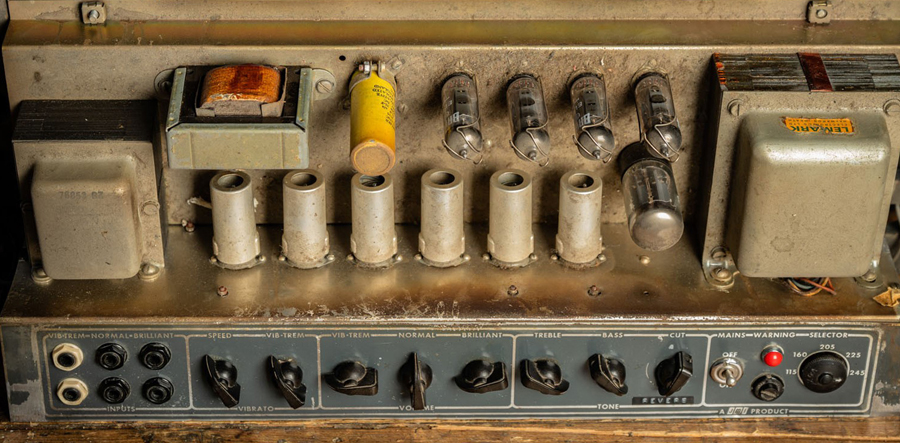
A JMI control panel, but most else looks like "Vox Sound Equipment Limited" (1968 to late 1969).
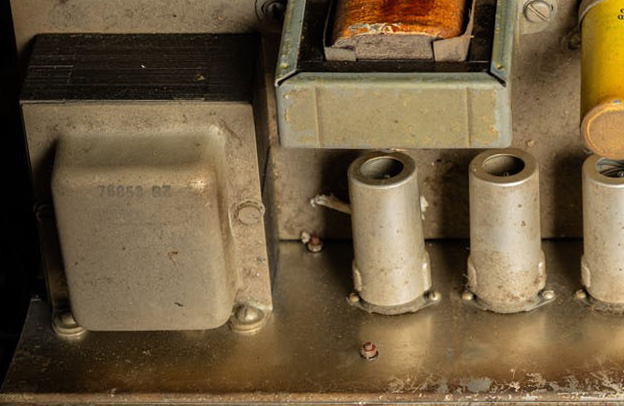
Woden output transformer with date code "BZ".
It may be necessary to move the entry in due course as the serial number has no real bearing on the amp.
17th March (2)
Also to say that Re-an sockets were fitted in 1960 to the new two-channel "square front" AC10s - the "Amplifier No.2".
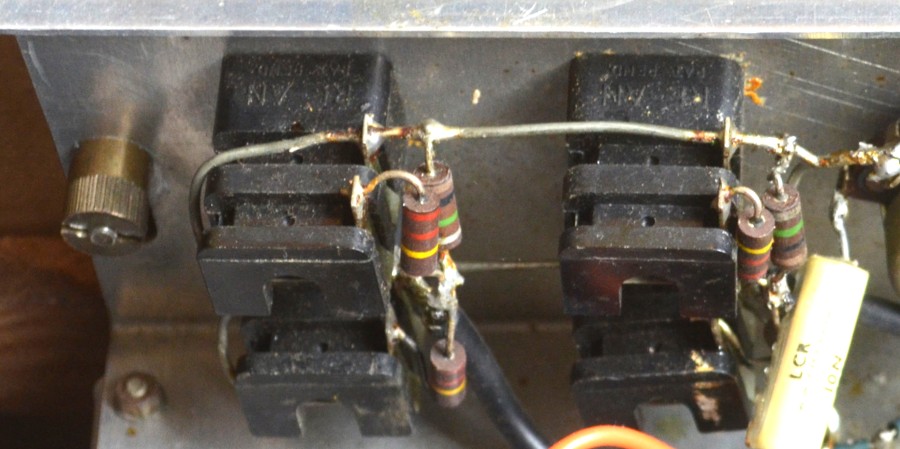
AC10 serial number 3224.
17th March
In late 1959 / early 1960, it appears that Jennings began to use Re-an, based in Dartford a few streets across from Dartford Road, for the footswitch sockets on AC/30s. Below, a detail of AC/30 serial number 4158. The same types of sockets are found also in number 4072. Re-ans do not seem to have been used for AC15s.
They were used by Triumph however for AC2s and AC4s (up to early to mid 1963).
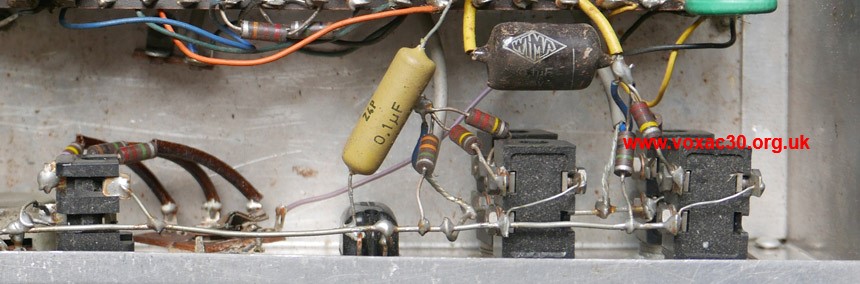
AC/30 serial number 4158, summer or early autumn 1960, Rendars with no logo at right, Re-an at left.
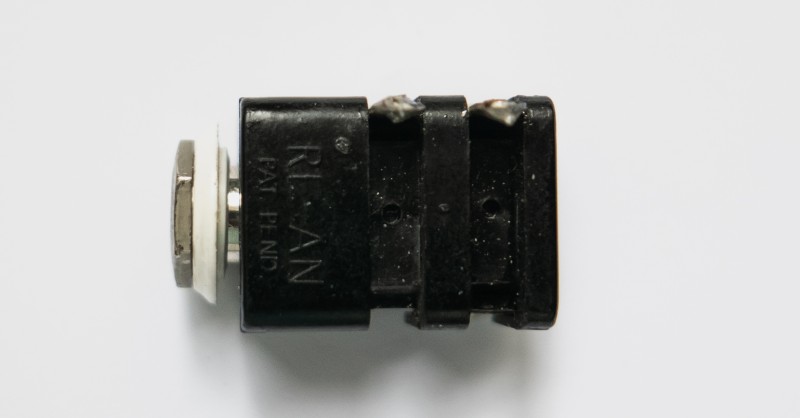
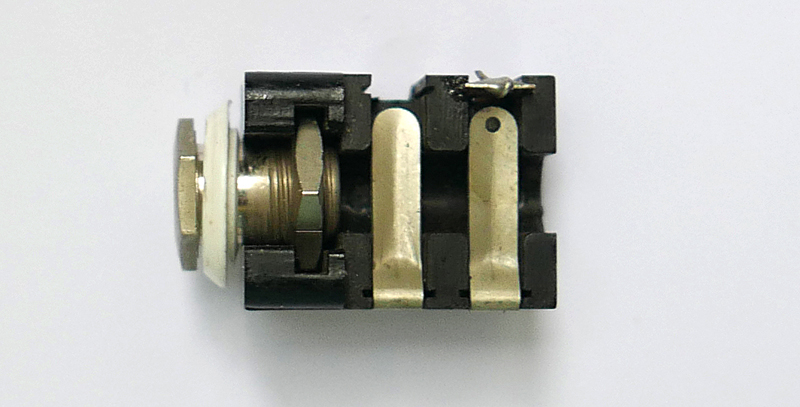
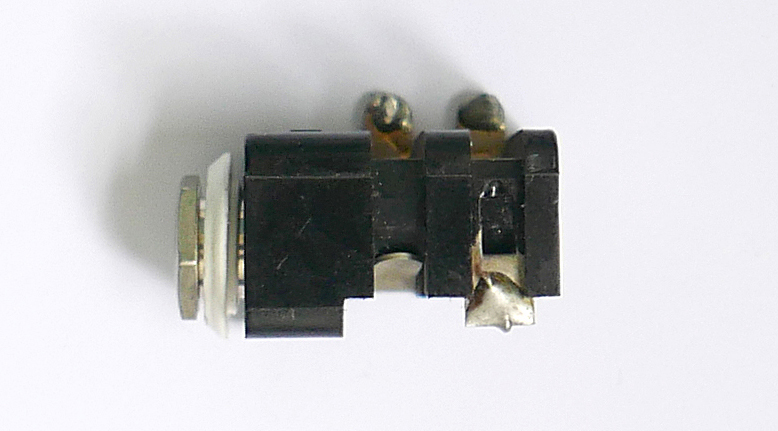
Shots of a Re-an socket removed from something other than a Jennings amp.
15th March
An instance of Rendar jack sockets with patent number (the patent granted in November 1964): AC4 serial number 4870. Thanks to Chris for the picture.
As the sockets with this new legend must have taken some time to manufacture and get to market, they are probably of much the same date as the main preamp filter capacitor in the chassis (assembled for JMI by Triumph) - early 1965. The amp will not have been ready for sale until some time later though.
AC4 serial number 4798 still has "Patent Applied For" sockets.
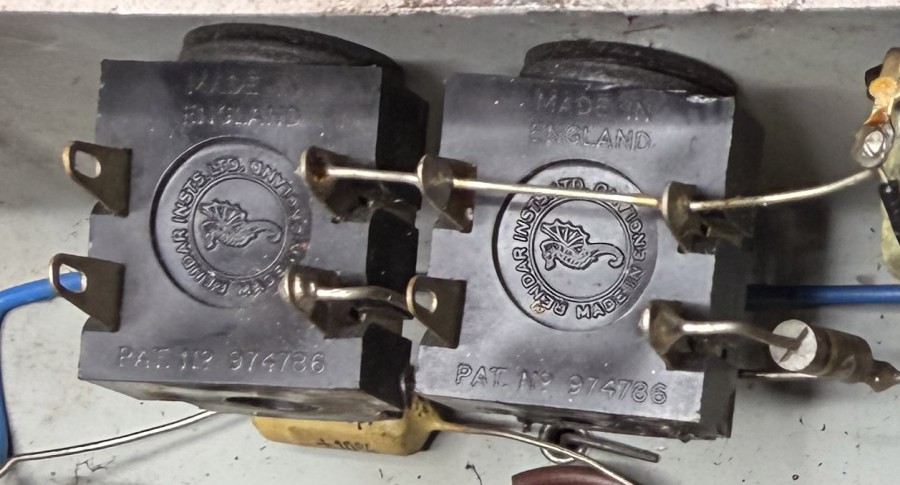
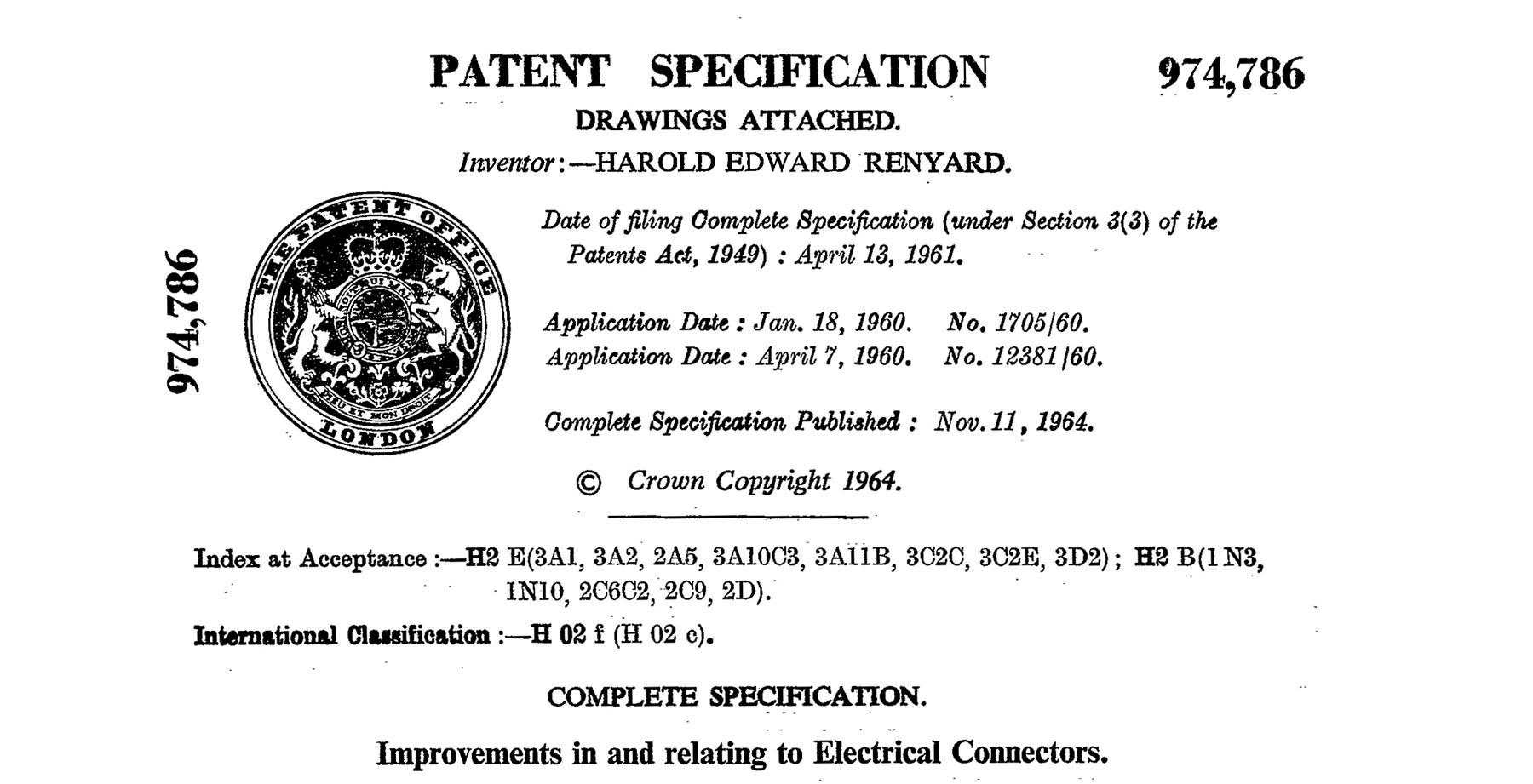
Patent No. 974786, see the details of the patent documents a little way below on this page.
14th March (2)
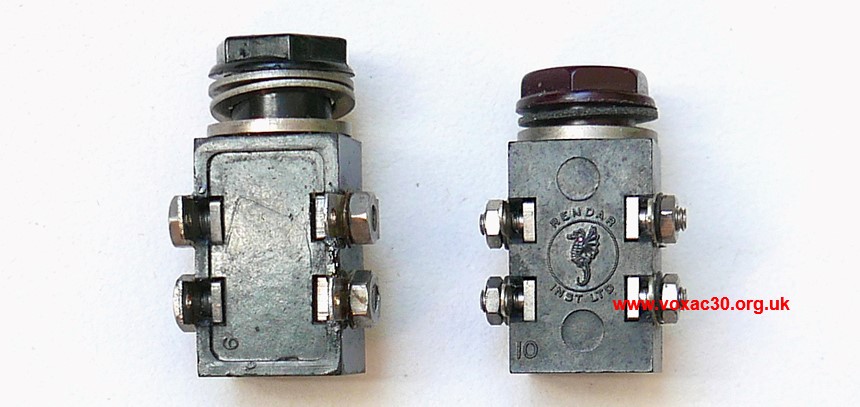
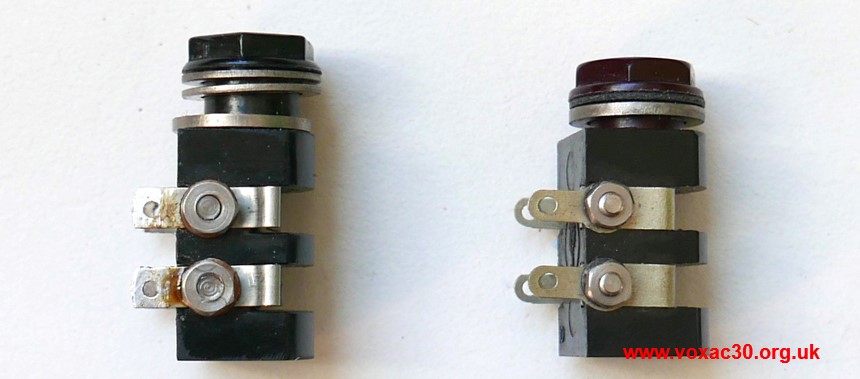
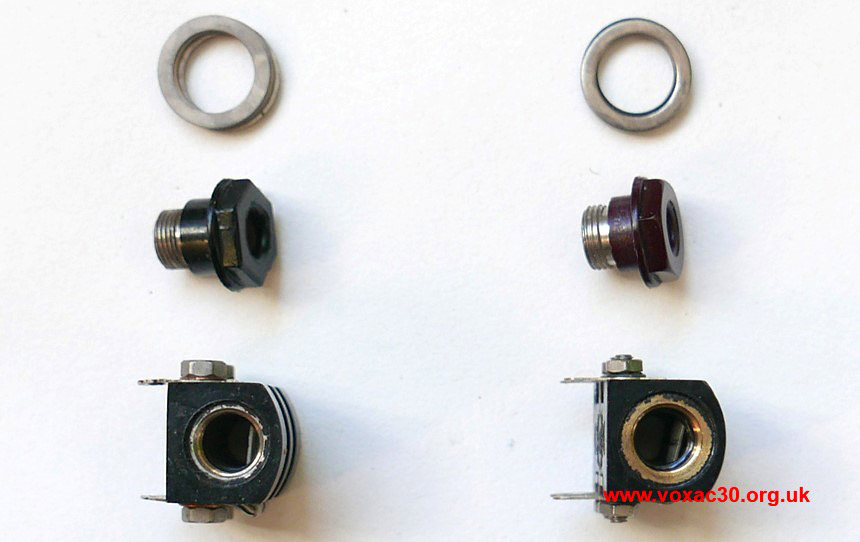
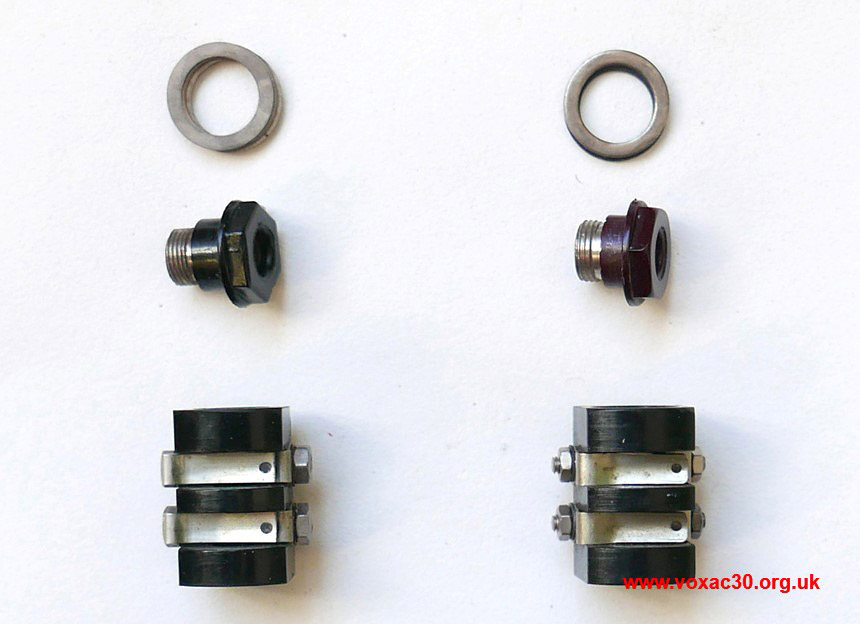
The earlier types of Rendar jack socket, used by Jennings from at least mid 1958 (AC15s with blue hammertone chassis) through to early 1962. By far the most common were those with the Rendar seahorse in a roundel. Note that the threads of the examples illustrated are different, so parts were not always interchangeable. End caps came with black, brown, olive green, red, and white nuts.
14th March
A quick survey of AC30s from mid 1964 to 1968 shows that Rendar jack sockets with "Patent Applied For" legends were regularly used through to the end of production in early 1968. The latest certain example that has come to light so far is Super Twin serial number 5645 (Woden output transformer dated "BZ" = Feb. 1968 for its manufacture).
Also to say that Rendar jacks with no legend relating to the patent (the area underneath the "Rendar" roundel being entirely blank) were also used during this period, often fitted side by side with sockets that had the "Patent Applied For" line. The presence or not of legends naturally meant nothing to those assembling the chassis.
So far, no example of a socket bearing the patent number. Later today or tomorrow, a note on earlier Rendars.
13th March
Rendar plastic-bodied jack sockets with a plastic nut. So far as one can tell, JMI began using these in early 1962. Prior to that a different type of Rendar socket had been employed - moulded bakelite, the nut part of a metal barrel that screwed into the body (to be illustrated in a coming post).
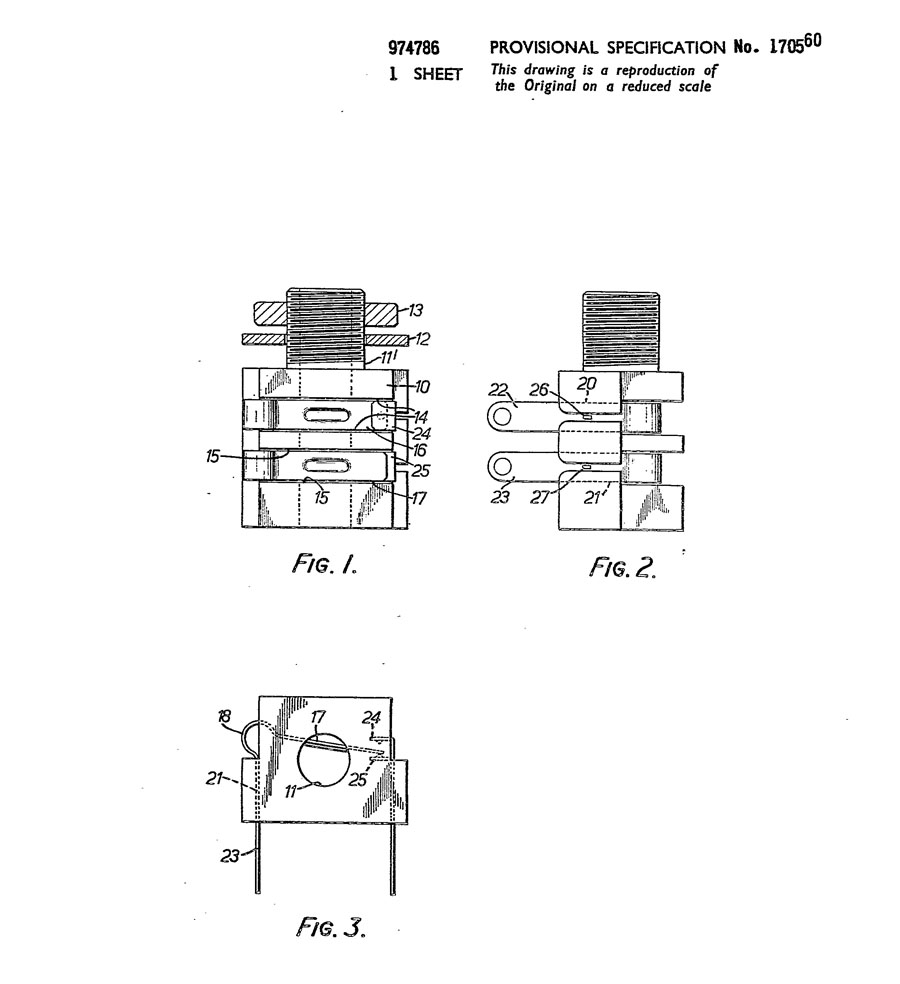
Below, details from the Rendar patent for its new all-plastic socket, applied for in 1960, granted (published) in November 1964.
JMI, or perhaps more accurately its contractors, evidently bought the new-style sockets in large quantities. The example with "Patent Applied For" is one of four from an AC50 made around Spring 1965.
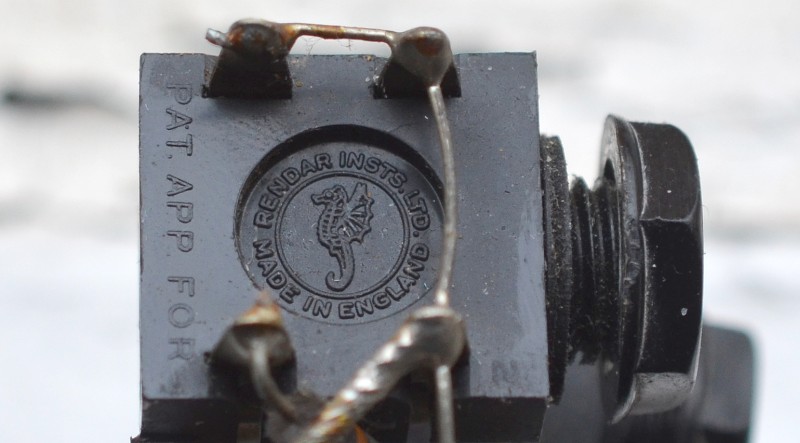
"Patent Applied For", one of four sockets from an AC50 from Spring 1965.
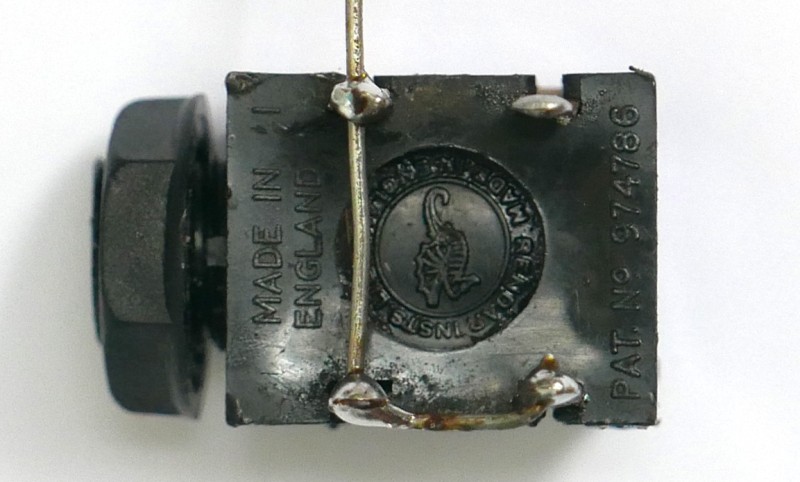
"Patent 974786".
12th March
There is now a google search widget specifically for the AC30, AC50, AC100, and Vox Supreme websites on this page. Thanks to Paul for suggesting.
11th March
A further five entries have been added to the page for AC30s with serial numbers in the 10000s - 10113N, 10225N, 10354N, 10591N, and 10787N. There is quite a gap from 10787 to the next amp that is known for certain (10920).
9th March
Small V O X logos, single letters. In terms of dateable occurences, they first appear in late July 1964 on the AC100s issued to John and George of The Beatles - the amps said to have been ready on 17th, seen in public for the first time on 28th. Copies of the reports can be found on this page.
The only other AC100s fitted out in this way were retained by JMI for loan / demonstration.
Also given small single-letter logos from time to time during the course of 1964 (and in later years) were:
the AC50: the first instances probably among serial numbers in the 1180s, 1207 certain, pictures on this page.
the AC30 Super Twin amplifier section: earliest instances currently known, insofar as serial numbers go, being numbers 2764 and 2714.
the AC4: serial number 4870 the only example encountered definitively so far.
Whether the letters always came from the supplier with lugs at back, as in the case of the "O" pictured below, is not known. The suspicion is that sometimes they were removed at Dartford Road, the plastic cemented directly to the grille cloth.
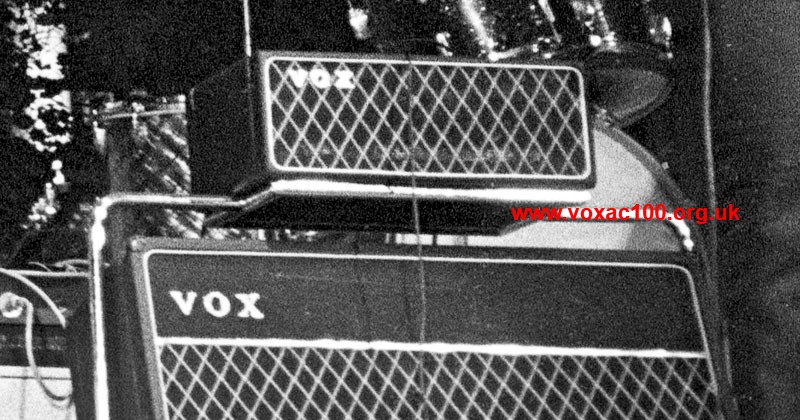
Stockholm, July 1964.
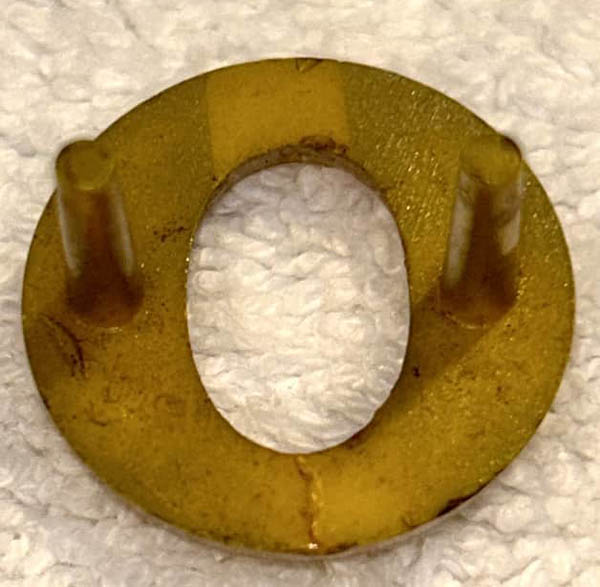
"Small "O". Other small "O"s (no longer attached to amps) appear to have had their lugs neatly removed.
8th March
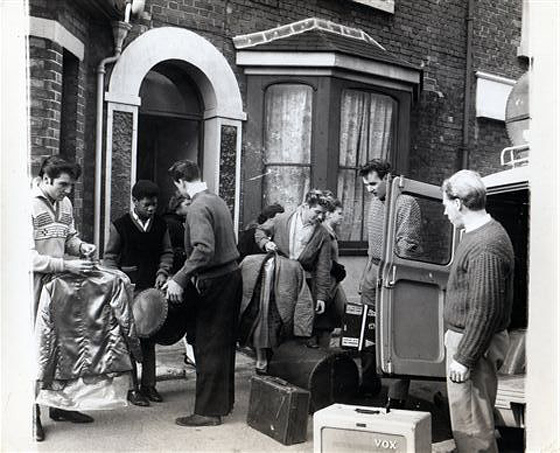
Southampton c. 1960, an AC/15 (first circuit) or AC/30 with the beige grille cloth used occasionally by JMI on both models. Picture from this page.
6th March
Quick shots of the contents of a Thomas Organ "Organs and Accessories" Service Manual from April 1967 fairly concise in scope - the Jennings-made Continental (V301J); plug-in booster units for guitar; microphones; and the Grenadier X and XII column speakers.
These manuals are often a little quirky; it is hard - these days at any rate - to find two the same.
The circuit diagrams for the Continental, all of which have long been known, are copies of JMI's, quality leaving something to be desired. The "complete schematic" - Thomas reference number 38-5495-0 - is not encompassed in this collection, possibly because it had not yet been brought into being (i.e. copied from JMI's TO/065?). The earliest copy of known date is from September 1967.
The other elements are Thomas's own though, the overview of types of tone generator board (with good photos) having been prepared initially for the "Pocket Manual" of late 1966.

Inner cover page.

Material relating to the V301J.
5th March
A page has now been set up here for accordions with Jennings labels (and other forms of provenance).
3rd March
Picking up from the entry below for the 26th February, a relatively early Mullard EL34 Xf1 produced by the Blackburn factory, date code "B7I" = September 1957. Production began in Blackburn in Spring '57, valves for the British market for the most part stamped "British Made", those for export "Made in Britain" or "Made in Gt. Britain".
The new bakelite base - superceding the initial Philips / Valvo metal version - made the EL34 more reliable under stress (principally heat).
The earliest dated Jennings circuit diagram to specify an EL34 seems to be the "Power Pack no. 3" (for organ) from August 1957. It is likely that the "30 Watt [Organ] Amplifier", the starting point on the face of things of the Vox AC2/30 guitar and accordion amplifier, was designed at around this time too.
Did the new source of EL34s prompt Derek Underdown to experiment and work up new designs? Intriguing to think that valves similar in date to the one below might have been fitted to AC2/30s.
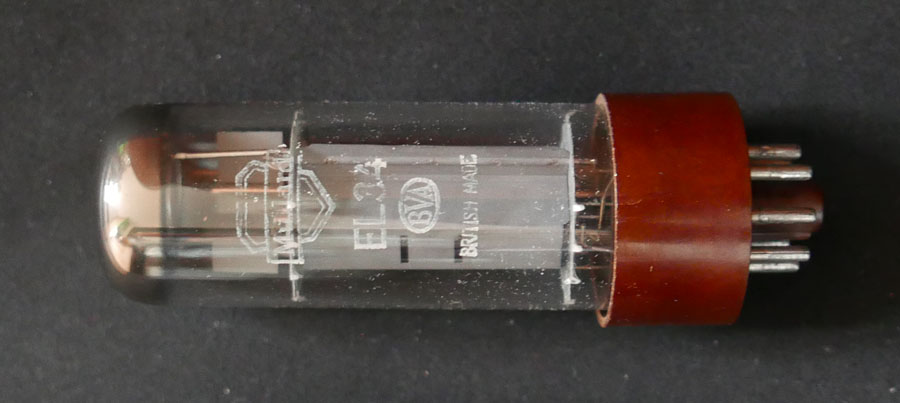
April 1955.
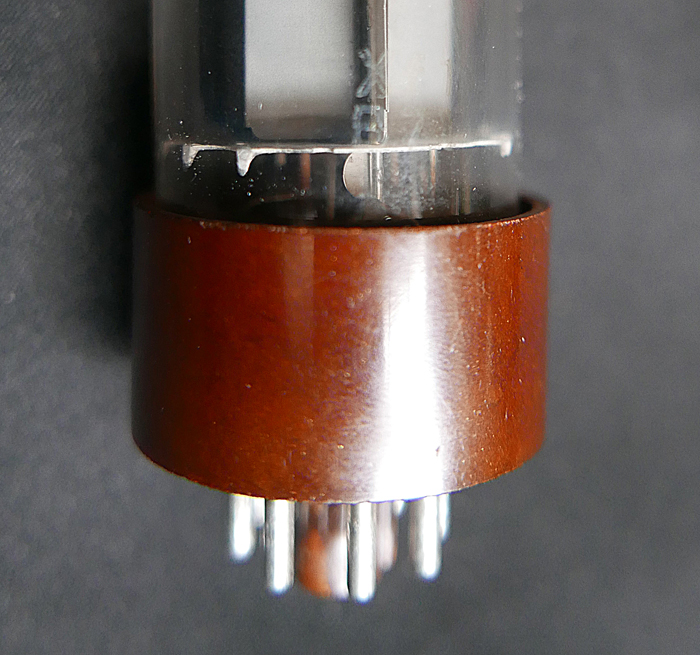
The date code is difficult to photograph, but in the right light one can still make out "Xf1 / B7I". The earliest Blackburn made EL34 currently known is from March 1957.
2nd March
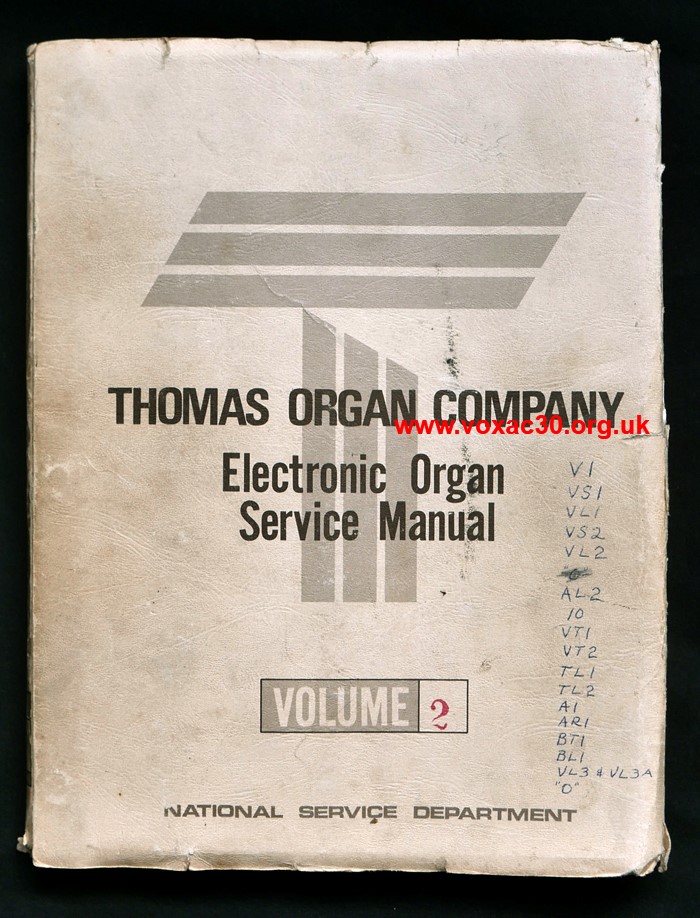
Recently to hand, a copy of the Thomas Organ Company Electronic Organ Service Manual part 2, encompassing a good number of organs from the first years of the 1960s, some all valve, others hybrid (transistor filtering and effects modules, all-valve power sections).
The circuit diagrams show that Thomas was indeed the originator of the repeat percussion circuit adopted by Jennings in late 1964, the organs in view (VL-3, VL-3A, and BL-1) being precursors to ones shown at the Russell Hotel Trade Show in August. See the entry for 8th February, below on this page.
Earlier and later Thomas repeat percussion circuits are different.
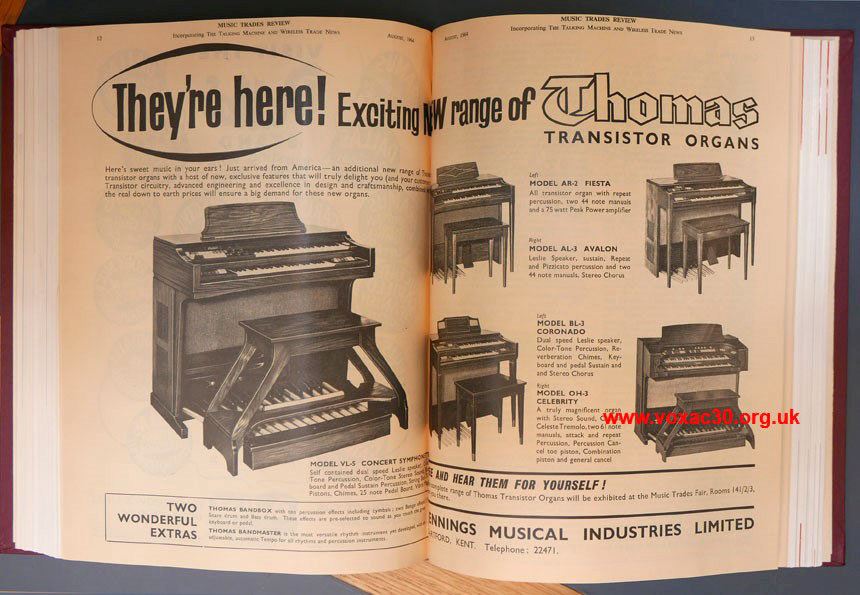
Jennings advert for Thomas, August 1964. Jennings had been appointed the main UK distributor by Thomas in the summer of 1963 and remained so until January 1967.
1st March
Thanks to James, an entry has now been made for AC30 serial number 9845N, and the entry for serial number 21126 has been updated and corrected.
PREVIOUS UPDATE PAGES BY MONTH, 2026
PREVIOUS UPDATE PAGES BY MONTH, 2025
PREVIOUS UPDATE PAGES BY MONTH, 2024
UPDATES 2023
UPDATES 2022
UPDATES 2021
UPDATES 2020